Woodside, Queens · since 2011
Physical Therapy in Woodside, NY
Five licensed physical therapists on 61st Street, treating back and neck pain, sciatica, shoulders, knees, hips, ankles and elbows, rehabilitation after surgery, vertigo and balance, sports and work injuries and pelvic health across western Queens. Sixty minutes, one to one, with the same therapist each visit — and most people do not need a doctor’s referral to start.
- 2011
- On the same block ever since
- 35
- Conditions with a published course length
- 60
- Minutes per appointment, always
- 0
- Prepaid visit packages sold here
You probably do not need a referral to start. New York’s direct access law lets a physical therapist treat you without a doctor’s referral for ten visits or thirty days, whichever comes first, provided they have been licensed at least three years — and every clinician here qualifies. Workers’ Compensation, No-Fault and Medicare are the three exceptions and each needs a referral from the very first visit. The whole rule is here, including the part about insurance that clinics tend not to mention.
The two things this trade does not usually put on a front page
The awkward things, said first
“How many visits will this take?” Every condition on this site publishes a typical range before you contact anybody, and you get an estimate specific to you, in writing, at the first appointment. An open-ended plan of care is how treatment quietly becomes a subscription, so we reassess against your own first-visit measurements at visit four — and if nothing has moved, the plan changes or you go back to a physician. We do not book another block and hope.
“Who will actually treat me?” A licensed physical therapist, in their own room, for the whole hour. New York bars a physical therapist assistant from evaluating you or changing your plan, and an unlicensed aide may not provide physical therapy at all — and yet a great many people have spent an appointment being counted through repetitions by somebody in a polo shirt while the therapist worked next door. Here it is five clinicians, five rooms and no overlap.
Six of 35
What people come to us for most
The full list runs to 35 conditions across 5 areas, and every one publishes the number of visits a course usually takes — which is an estimate rather than a promise, but is published before you contact anybody.

Physical therapy for low back pain
The most common reason anybody walks through this door, and the condition where the gap between what sells and what works is widest.
6 – 12 visits
Neck pain and stiffness
Desk necks, phone necks, slept-badly necks and the ones that are actually a shoulder. Telling them apart is most of the first appointment.
5 – 10 visits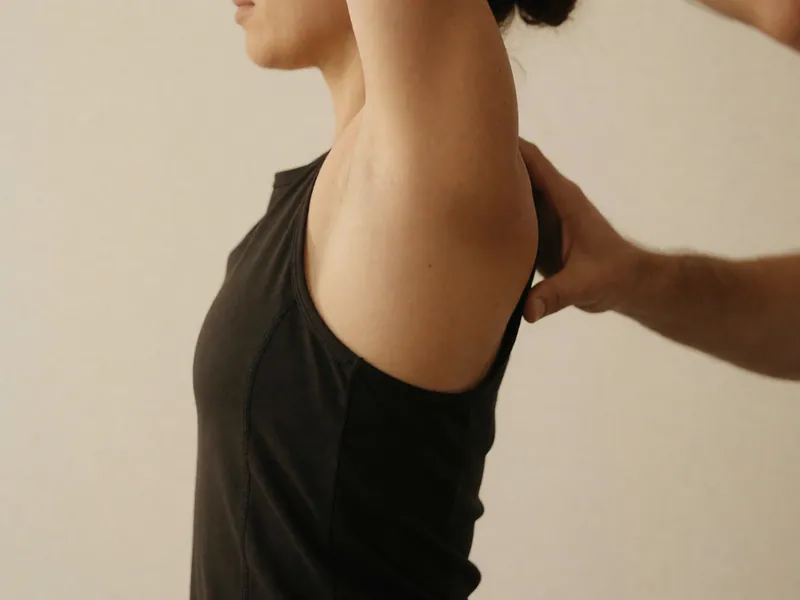
Shoulder pain
Five structures in a small space, all of which hurt in roughly the same place. The examination is what separates them.
8 – 14 visits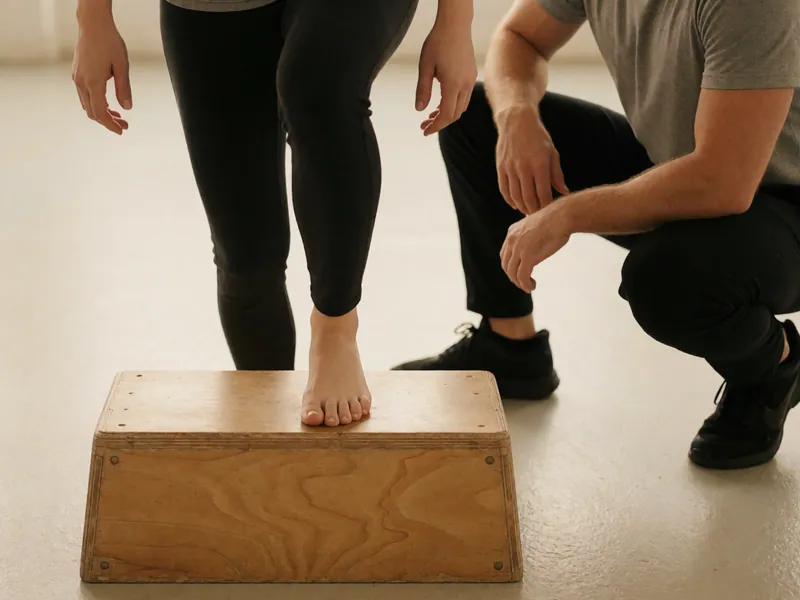
Knee pain
Stairs, kneeling, running, or the knee that hurts because of what the hip is not doing. All four get a different programme.
6 – 14 visits
Rehabilitation after knee replacement
The first six weeks decide the range of motion you keep. This is the rehabilitation where showing up early matters most.
16 – 24 visits
Vertigo and dizziness
Most dizziness that responds to physical therapy comes from the inner ear, and most of that is treatable in very few visits.
3 – 8 visitsBooking
Five real diaries, not one generic grid
The appointments page reads each therapist’s own schedule — their working days, their lunch break, the hours they have blocked out, and every appointment already booked whether it came from the website or from a telephone call. An hour showing free on screen is an hour that is genuinely free in somebody’s book.
It also means our calendar looks emptier than a clinic running three patients an hour on overlapping slots. That is the honest arithmetic of sixty-minute one-to-one appointments rather than a sign that nobody comes here, and it is worth knowing before you compare two booking pages.

Twelve arguments
Things this profession does not usually say out loud
Each has a page that makes the case properly, a sentence in the footer of every page on this site, and a check in the build that fails if the site ever contradicts itself.
The machines are not the treatment
The WHO recommends against therapeutic ultrasound for chronic back pain and NICE says not to offer it. They survive because they bill well and need nobody in the room.
Read itWho is allowed to treat you
An assistant may not evaluate you or change your plan, and an unlicensed aide may not treat you at all. Almost nobody is told the lines exist.
Read itWhy we cannot do dry needling
New York holds it outside the physical therapy scope of practice — one of only four states that does. Some clinics here still advertise it.
Read itNo prepaid blocks of visits
Twelve for the price of ten turns “you are better, stop coming” into a refund conversation. That sentence has to stay free to say.
Read itWhat your scan does not say
Disc bulges and rotator cuff tears are common in people with no symptoms at all. A report can be accurate and still not be why you hurt.
Read it$2,480 is not a cap
The therapy threshold triggers paperwork, not the end of your benefit. A clinic discharging you at it is describing its own policy.
Read itAnd six more, starting with the referral rule almost nobody explains properly
How a course runs
From the first hour to a deliberate discharge
You book a slot, or you telephone
Sixty minutes, with a named clinician, at a time on the calendar that is genuinely free — the booking page shows each therapist's own diary rather than a generic grid. You do not need a doctor's referral to start, unless the claim is Workers' Compensation, No-Fault or Medicare, in which case you do from the first visit. If you are not sure which of those you are, telephone and we will work it out with you before you book.
The first visit is mostly questions
What you cannot do, when it started, what makes it worse, what you have already tried and what happened. Then an examination aimed at reproducing your problem rather than at cataloguing your body. You will leave the first appointment knowing what we think it is, what we think the course looks like, and what would make us change our mind.
You get a number of visits, at the start
An estimate, in writing, of how many appointments this should take and what it means if it has not moved by then. Every condition page on this site publishes that range too, before you contact anybody. An estimate can be wrong and we will tell you when ours is; what it cannot be is absent, because an open -ended course is how a plan of care becomes a subscription.
Most of the work happens when you are not here
Three or four exercises, written down, with the sets, the load and the days. This is the part that actually changes tissue, and clinic time exists to make it possible and to check it is being done correctly. A programme of eleven exercises is a programme nobody completes, which is why you will not be given one.
We reassess at visit four, not at visit ten
The same measurements taken at the first visit, repeated. If they have moved, we carry on and progress the load. If they have not, we change the plan or we send you back to a physician — and we say which, plainly, rather than booking another block and hoping. Direct access here also runs out at ten visits or thirty days, so this conversation happens well before the law forces it.
You are discharged, on purpose
With the programme that got you here and the version that keeps you there. We do not schedule maintenance appointments for people who no longer need treatment, and we do not sell blocks of visits in advance — the sentence “you are better, stop coming” has to be free to say.
Published
What it costs
Self-pay rates, the same for everybody, with no discounted block you have to buy in advance to get them.
5 therapists, 5 rooms
Nobody here is on a productivity target
This matters more than it sounds. A therapist working to a daily unit number has a reason to add a modality to a plan that does not need one, to keep somebody on the books a fortnight longer, and to avoid the conversation where a course is stopped early. Removing the target removes the reason, and it is the single most useful thing you can know about how a clinic is run.
Five clinicians, one floor on 61st Street, and about eight patients each a day rather than sixteen. The person who measures you at the first appointment is the person who notices what has changed by the sixth — which is the part of this job the hour is actually for.

Western and central Queens
Where our patients come from
Based on 61st Street and treating across 12 neighbourhoods. Each has a recognisable housing stock and a recognisable working population, and both change what a rehabilitation plan has to account for.
- Woodside
- Sunnyside
- Astoria
- Jackson Heights
- Elmhurst
- Maspeth
- Long Island City
- Rego Park
- Corona
- Middle Village
- Ridgewood
- Forest Hills
Asked most often
Questions people telephone about
Do I need a doctor's referral for physical therapy in New York?
Usually not. New York's direct access law lets a physical therapist who has been licensed at least three years treat you without a referral for ten visits or thirty days, whichever comes first — every clinician here qualifies, so you can book and be treated on the same day. Two exceptions matter and they catch people out: an evaluation on its own does not count as one of the ten, and direct access does not apply to Workers' Compensation, No-Fault or Medicare, all of which need a referral from the very first visit. We are also required to tell you in writing at the start that treatment without a referral may not be covered by your plan, and we do that before you are treated rather than after.
How much does physical therapy cost in Woodside?
If you are paying yourself, $190 for the initial evaluation and $140 for each treatment visit, published on the pricing page and not negotiable downwards for some people and not others. If you are using insurance, what you pay is your plan's copay or coinsurance and we will check the actual number before your first visit rather than after your sixth. What we will not do is sell you a discounted block of twelve sessions in advance, because that gives us a reason to use all twelve.
How many sessions will I need?
Every condition page on this site publishes a typical range, and you get an estimate specific to you in writing at the first appointment. Most mechanical back and neck problems run six to twelve visits. Positional vertigo is often one to three. An ACL reconstruction is thirty to fifty over nine to twelve months. The estimate can be wrong; what it cannot be is missing, and we reassess at visit four so that a course which is not working gets changed rather than extended.
Do you do dry needling?
No, and no physical therapist in New York may. The State Board has held dry needling to be an invasive procedure outside the physical therapy scope of practice, and acupuncture needles may be used here only by licensed acupuncturists and by physicians and dentists certified to do it. New York is one of only four states that take that position, which is why clinics that relocated from elsewhere sometimes still advertise it. If it is what you want, we will tell you who is licensed to provide it.
Will a physical therapist actually treat me, or an assistant?
A licensed physical therapist evaluates you, writes your programme and is the only person who may change it. That is the law rather than our policy: a physical therapist assistant is barred from evaluating, interpreting or altering a plan of care, and an unlicensed aide may not provide physical therapy at all. Here you see the same named clinician each visit, in their own room, and if that person is away you are told before you arrive rather than handed to whoever is free.
Do you use ultrasound, TENS or traction?
Rarely, and never as the substance of a plan. The World Health Organization's 2023 guideline recommends against therapeutic ultrasound in routine care for chronic low back pain and NICE recommends against offering it at all for back pain; the Cochrane review found an effect too small to matter. These machines persist because they bill well and occupy no clinician, and a course built around them is a course built around the billing. What changes tissue is loaded exercise, and that is what you will be given.
Sixty minutes, one to one, with the therapist you chose
Book an appointment
The booking page shows each therapist's own diary rather than a generic grid, so a slot you can see is a slot that is genuinely free. Most people do not need a doctor's referral to start — New York's direct access law runs to ten visits or thirty days — though Workers' Compensation, No-Fault and Medicare each need one from the first visit. If you are not sure which of those you are, telephone and we will work it out before you book.