Balance, nerves and dizziness
Balance and falls prevention
Falling is not a consequence of age. It is a consequence of specific, measurable and largely trainable deficits, and we measure them rather than guessing.
The single most important thing about falls prevention is that it is dose-dependent. The programmes with good evidence behind them involve a substantial amount of genuinely challenging balance work sustained over months. A leaflet, a wobble cushion and three appointments do not reduce anybody's fall risk, and the research is clear about that.
That makes this one of the longer courses on this site and we say so at the first appointment, because somebody expecting six visits will stop at the point where the benefit was about to start.
What we measure
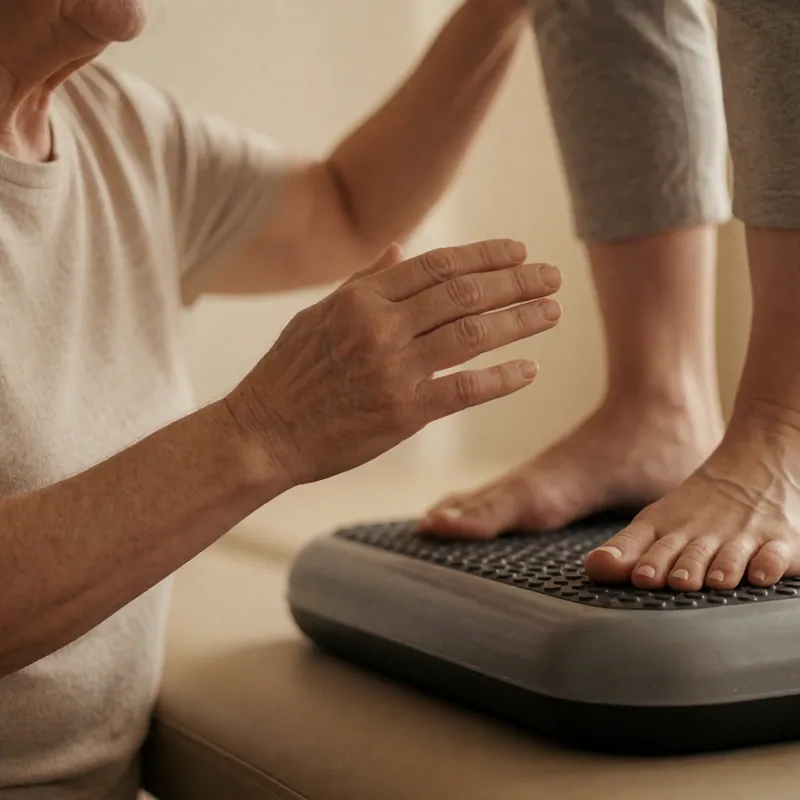
Sit-to-stand repetitions in thirty seconds, which is a strength measure disguised as a balance one. Gait speed over a marked distance. Single-leg stance time. A timed up-and-go. And where relevant, a standardised balance scale.
These are numbers rather than impressions, they are repeated at intervals, and you get to see them. Somebody who can see their sit-to-stand count going up argues with the programme considerably less than somebody being told they are improving.
We also ask about the falls you have already had — where, doing what, in what light, wearing what. The pattern is usually informative and nobody has usually asked.
Why strength is half of balance
A large share of what looks like poor balance is insufficient strength to correct a stumble. The recovery from a trip requires a fast, powerful step, and a leg that cannot produce force quickly cannot make it.
Which is why the programme includes real resistance training rather than only balance exercises, and why the load has to be meaningful. This is the point where our page on older adults becomes relevant: resistance light enough to look prudent is frequently light enough to do nothing.
What else contributes
Vision, medication, blood pressure, footwear, the home environment and the inner ear all matter, and several of them are not ours. We screen and we tell you what to raise with your physician — a medication review in somebody on several drugs is frequently the highest-value intervention available and it is not one we can make.
Dizziness gets specifically screened, because a treatable vestibular problem sitting underneath a falls presentation changes the entire plan and is quickly identified.
The visit allowance problem
A programme with real evidence behind it runs for months, and most plans do not allow for that. So the arithmetic has to be planned rather than discovered: supervised sessions where the progression and the challenge need calibrating, and a home programme carrying the volume in between.
We will tell you at the start what your allowance is and how we propose to spend it.
Your plan's visit cap, checked before you start. Most commercial plans cap physical therapy visits per calendar year, and the cap is frequently lower than the course of treatment a condition needs. We check your benefit before the first visit rather than after the sixth, we tell you the number, and we plan the course around it — front-loading the hands-on work and handing you more of the programme to run yourself if the arithmetic says we should.
Included as standard
How we treat this
Measured, not estimated
Sit-to-stand, gait speed, single-leg stance and timed up-and-go, repeated at intervals and shown to you.
Real resistance training, not only balance work
Recovering from a stumble needs a fast powerful step, and that is a strength problem before it is a balance one.
Your actual falls asked about
Where, doing what, in what light, wearing what. The pattern is usually informative and nobody has usually asked.
Contributors outside our scope named
Vision, medication, blood pressure and footwear. A medication review is frequently the highest-value intervention and it is not ours to make.
Dizziness screened
A treatable vestibular problem underneath a falls presentation changes the whole plan and is quickly identified.
An honest dose, planned against your allowance
This is a months-long programme. We will tell you at the start how we propose to spend the visits you have.
When to make an appointment
Signs this is worth an assessment
- You have fallen in the last year, or nearly fallen more than once.
- You have started holding furniture as you move around at home.
- You avoid going out in the dark, or in the wet, because of your footing.
- Getting out of a low chair has become something you plan.
- You feel unsteady on uneven pavement or on kerbs.
- Somebody in your family has become worried about it before you have.
Balance & falls — how long a course usually takes
- A typical course. The evidence for falls prevention is dose-dependent — programmes that work involve a great deal of balance challenge over months, not a leaflet.12 – 24 visits
This is a typical number of visits for this problem, not a quote and not a promise. You get an estimate specific to you, in writing, at the first appointment, and we reassess against the same measurements at visit four rather than at visit ten — so a course that is not working gets changed or stopped instead of extended. What each visit costs is published on the pricing page: $190 for the initial evaluation and $140 for a treatment visit if you are paying yourself, or your plan's copay if you are not. We do not sell blocks of visits in advance.
Questions we are actually asked
Balance & falls — frequently asked
Can falls really be prevented?
Risk can be substantially reduced, and the evidence for that is good — provided the dose is sufficient. Programmes that work involve a lot of genuinely challenging balance work sustained over months. A leaflet and three appointments does not reduce anybody's risk, and it is worth knowing that before agreeing to one.
How long does a falls prevention programme take?
Twelve to twenty-four visits here, spread across months, with a home programme doing much of the volume. It is one of the longer courses on this site and we say so at the first appointment — somebody expecting six visits will stop right where the benefit was about to start.
Why are you giving me strength exercises for a balance problem?
Because recovering from a stumble requires a fast, powerful step, and a leg that cannot produce force quickly cannot make it. A large share of what presents as poor balance is insufficient strength, and it is the more trainable half.
What else affects my risk of falling?
Vision, medication, blood pressure, footwear, the home environment and the inner ear. Several of those are not ours — a medication review in somebody taking several drugs is frequently the single highest-value intervention available, and we will tell you to raise it with your physician rather than pretend we can do it.
Is it too late to start if I am already falling?
No. Strength and balance are trainable in the eighties and nineties, and the people with the most to gain are usually the ones who have already started falling. What changes is that the programme needs supervising more closely at the start.
Related conditions
Often seen alongside this

Older adults
Strength training works at eighty. It works at ninety. The dose that works is heavier than almost anybody is offered.
12 – 24 visits
Vertigo & dizziness
Most dizziness that responds to physical therapy comes from the inner ear, and most of that is treatable in very few visits.
3 – 8 visits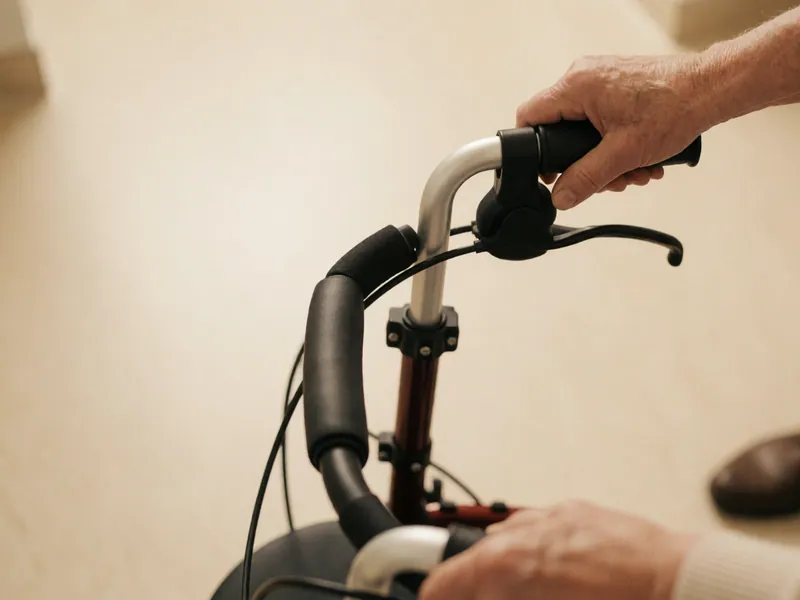
Spinal stenosis
When walking distance shrinks and leaning on a shopping trolley helps, the mechanism is specific and so is the treatment.
10 – 20 visits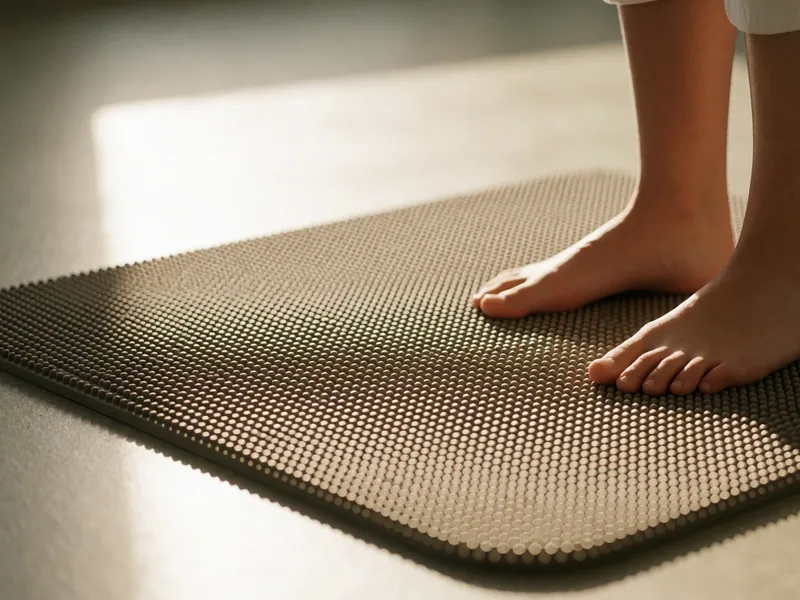
Neuropathy
When sensation is unreliable, balance has to be rebuilt on the senses that still work. That is trainable even when the nerve is not.
10 – 20 visitsSixty minutes, one to one, with the therapist you chose
Book an appointment
The booking page shows each therapist's own diary rather than a generic grid, so a slot you can see is a slot that is genuinely free. Most people do not need a doctor's referral to start — New York's direct access law runs to ten visits or thirty days — though Workers' Compensation, No-Fault and Medicare each need one from the first visit. If you are not sure which of those you are, telephone and we will work it out before you book.