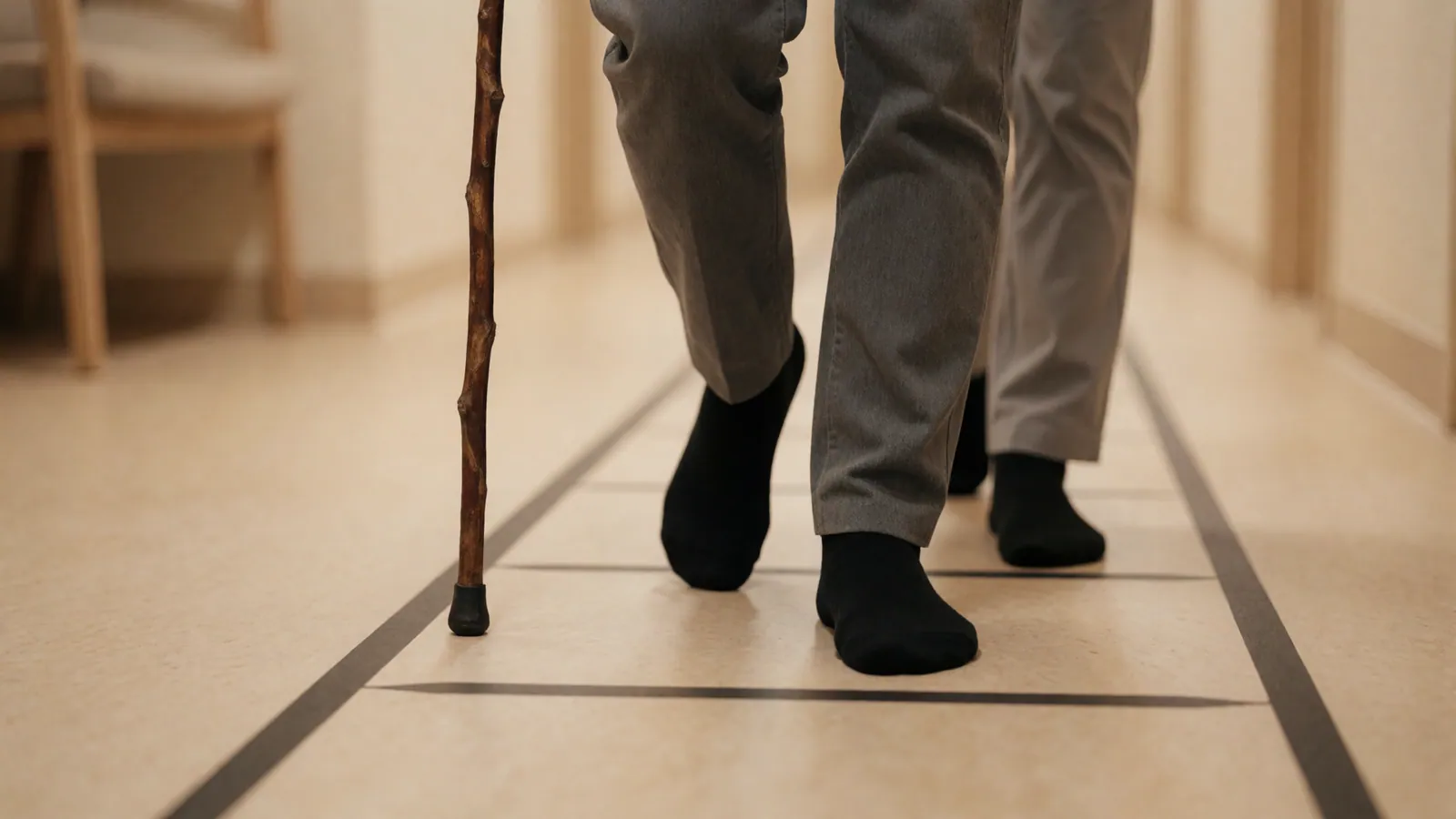
Rehabilitation after surgery
Rehabilitation after hip replacement
Faster and less painful than the knee, and the mistake here is stopping too soon — because walking feels normal well before the muscle has come back.
Hip replacement recovery is generally kinder than knee replacement recovery. Pain settles faster, walking returns sooner, and people are frequently delighted within a fortnight — which is the problem, because the muscle that stabilises the hip in single-leg stance takes considerably longer than the comfort does.
The consequence of stopping early is a limp a year later, and it is a limp that is entirely preventable and quite hard to fix retrospectively.
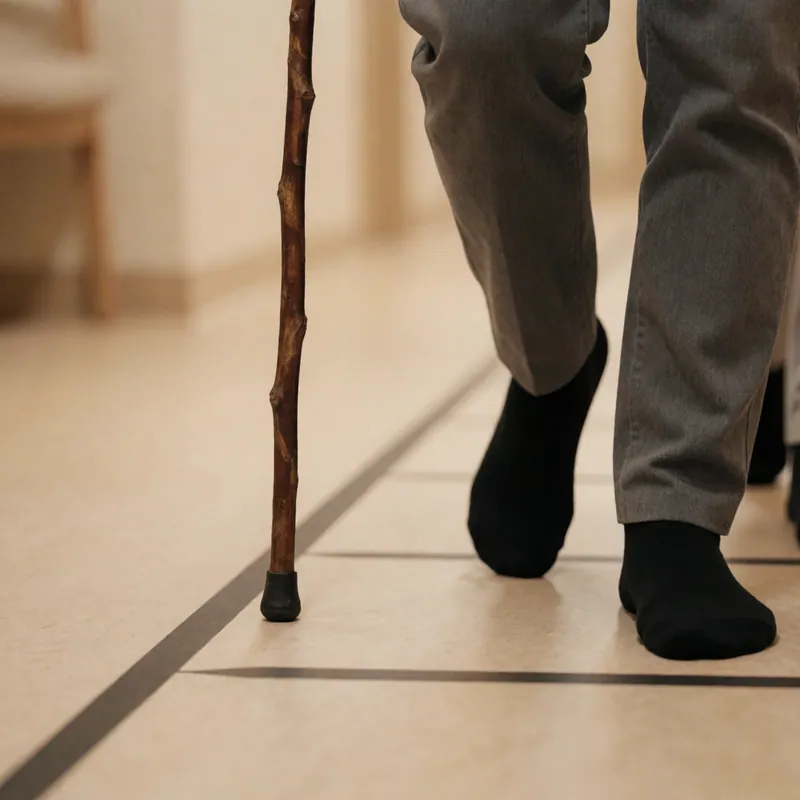
Why the abductors are the whole story
Every step you take is a moment of single-leg stance, and the muscles on the outside of the hip are what stop the pelvis dropping on the other side. After a hip replacement they are weak — from the surgery, from the months of limping beforehand, or both.
Somebody can walk comfortably on a weak hip by leaning over it, which is what a limp is. It does not hurt, it looks like recovery, and it is a strength deficit being compensated for rather than resolved.
So the programme is progressive single-leg loading, and the marker is not how far you can walk but whether your pelvis stays level when you stand on it.
Precautions, and who sets them
Whether you have hip precautions — limits on bending, crossing the legs or rotating — depends on the surgical approach and on your surgeon's preference. Some approaches carry few or none. Your surgeon decides this and we work to what they have specified.
Bring the discharge paperwork. If it says something we would not have expected, we telephone them rather than assuming it is a mistake.
What the course looks like
Ten to eighteen visits over six to ten weeks for most people. Range and gait early, then progressive strengthening, then the specific things you need — the stairs in your building, getting in and out of a car, the walk to the station.
We ask what your building's entrance actually looks like, because a discharge that works in the clinic and fails at your front door is not a discharge.
Your plan's visit cap, checked before you start. Most commercial plans cap physical therapy visits per calendar year, and the cap is frequently lower than the course of treatment a condition needs. We check your benefit before the first visit rather than after the sixth, we tell you the number, and we plan the course around it — front-loading the hands-on work and handing you more of the programme to run yourself if the arithmetic says we should.
Included as standard
How we treat this
Abductor strength as the primary target
Because it is what decides whether you limp a year later, and it lags comfort by months.
Level-pelvis testing rather than distance
Walking far on a weak hip is achieved by leaning over it. The honest marker is whether the pelvis stays level.
Your surgeon's precautions followed exactly
They depend on the surgical approach and they are the surgeon's call, not ours.
Your actual stairs trained
We ask what your entrance looks like. A discharge that works here and fails at your front door is not a discharge.
A reason to keep going past comfort
Explained rather than asserted, because the fortnight when you feel fine is when people stop.
Prehabilitation where there is time
Strength before the operation measurably shortens the recovery after it.
When to make an appointment
Signs this is worth an assessment
- You have a hip replacement booked and want to prepare.
- You are a few weeks post-operative and unsure what you should and should not be doing.
- You feel fine walking but have been told you still limp.
- You cannot stand on the operated leg without the other hip dropping.
- Stairs or getting out of a low car seat are still a problem.
- You stopped rehabilitation early and a year on you are still not right.
Hip replacement — how long a course usually takes
- A typical course over six to ten weeks. Hip abductor strength lags well behind comfort, and it is what determines whether you limp a year later.10 – 18 visits
This is a typical number of visits for this problem, not a quote and not a promise. You get an estimate specific to you, in writing, at the first appointment, and we reassess against the same measurements at visit four rather than at visit ten — so a course that is not working gets changed or stopped instead of extended. What each visit costs is published on the pricing page: $190 for the initial evaluation and $140 for a treatment visit if you are paying yourself, or your plan's copay if you are not. We do not sell blocks of visits in advance.
Questions we are actually asked
Hip replacement — frequently asked
How long does recovery from a hip replacement take?
Comfort returns quickly — often within a few weeks — and strength takes considerably longer. A typical course here is ten to eighteen visits over six to ten weeks, with a home programme continuing beyond that. The commonest mistake is stopping when walking feels normal, which is well before the abductors have recovered.
What are hip precautions and do I have them?
Limits on bending, crossing the legs or rotating the hip, intended to reduce dislocation risk. Whether you have them and how strict they are depends on the surgical approach and on your surgeon's preference — some approaches carry few or none. Your surgeon decides, and we work to what they specified.
Why do I still limp when nothing hurts?
Because a limp is usually a strength deficit being compensated for rather than a pain response. The hip abductors stop your pelvis dropping in single-leg stance, and after a replacement they are weak from the surgery and from months of limping beforehand. Comfort returns long before they do.
Is hip replacement rehab easier than knee?
Generally yes — less painful, faster to comfortable walking, and without the same urgent range window. That is exactly why people stop too early, and why a limp a year later is more common after a hip than after a knee.
Can I prepare before the operation?
Yes, and it helps. Strength built beforehand shortens the recovery, and it is the cheapest useful thing you can do about a date six weeks away.
Related conditions
Often seen alongside this
Hip pain
True hip pain is felt in the groin. Pain on the outside of the hip is usually a tendon, and it is made worse by exactly the stretch people are given for it.
8 – 16 visits
Knee replacement
The first six weeks decide the range of motion you keep. This is the rehabilitation where showing up early matters most.
16 – 24 visits
Balance & falls
Falling is not a consequence of age. It is a consequence of specific, measurable and largely trainable deficits, and we measure them.
12 – 24 visits
Older adults
Strength training works at eighty. It works at ninety. The dose that works is heavier than almost anybody is offered.
12 – 24 visitsSixty minutes, one to one, with the therapist you chose
Book an appointment
The booking page shows each therapist's own diary rather than a generic grid, so a slot you can see is a slot that is genuinely free. Most people do not need a doctor's referral to start — New York's direct access law runs to ten visits or thirty days — though Workers' Compensation, No-Fault and Medicare each need one from the first visit. If you are not sure which of those you are, telephone and we will work it out before you book.