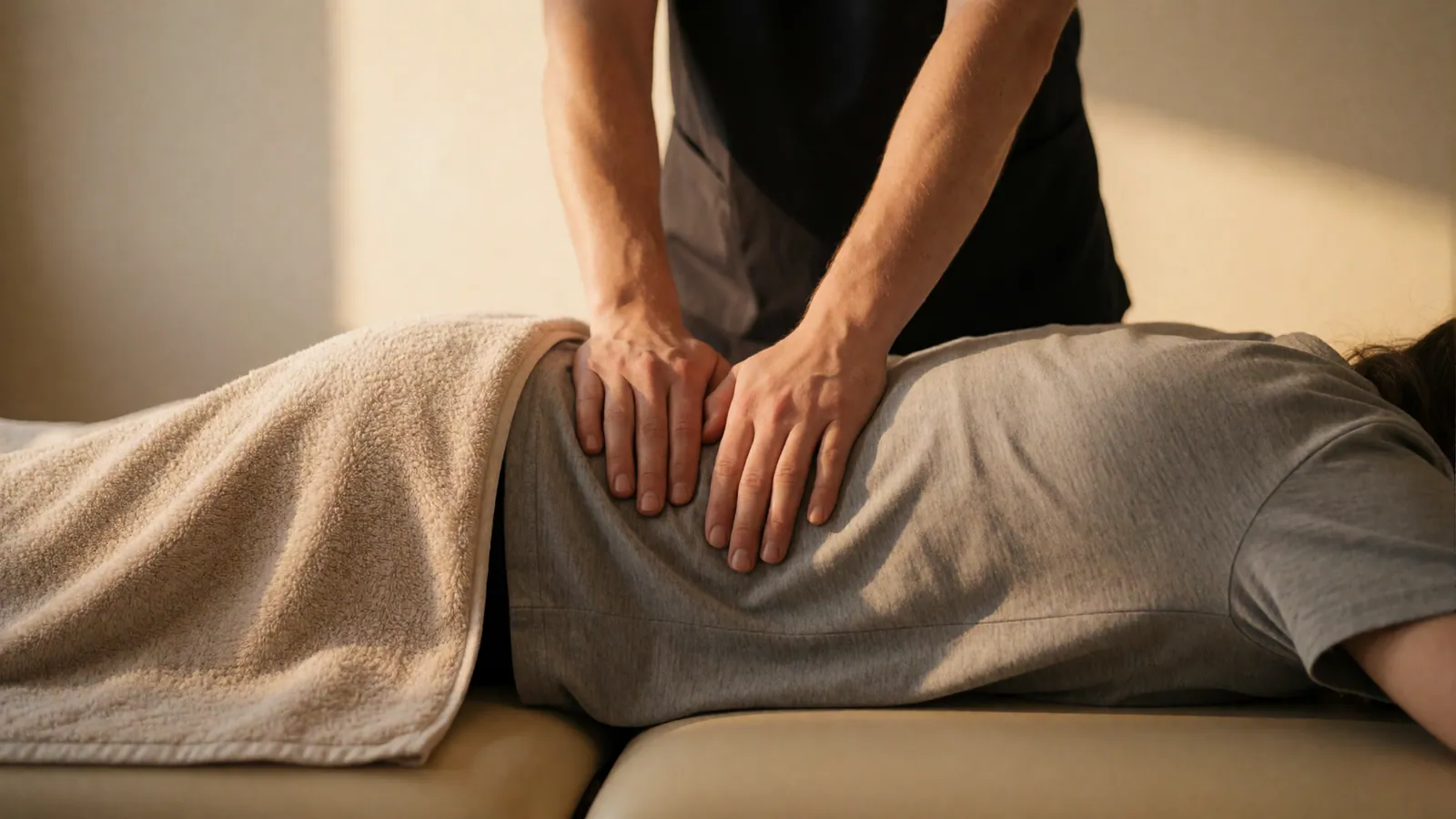
Back, neck and spine
Physical therapy for low back pain
The commonest reason anybody walks through this door, and the condition where the distance between what sells well and what works is widest. Most people are meaningfully better inside three weeks.
Most low back pain is mechanical: a tissue that has been asked to do more than it currently can, in a body that has adapted around it. It is genuinely painful, it is genuinely frightening the first time it happens, and it is not usually a sign that anything is damaged in a way that will not recover.
What it responds to is movement, graded and progressed, plus enough hands-on work at the start to make movement tolerable. What it does not respond to, on the evidence, is a course of passive machines — and back pain is the single condition where those get sold hardest.
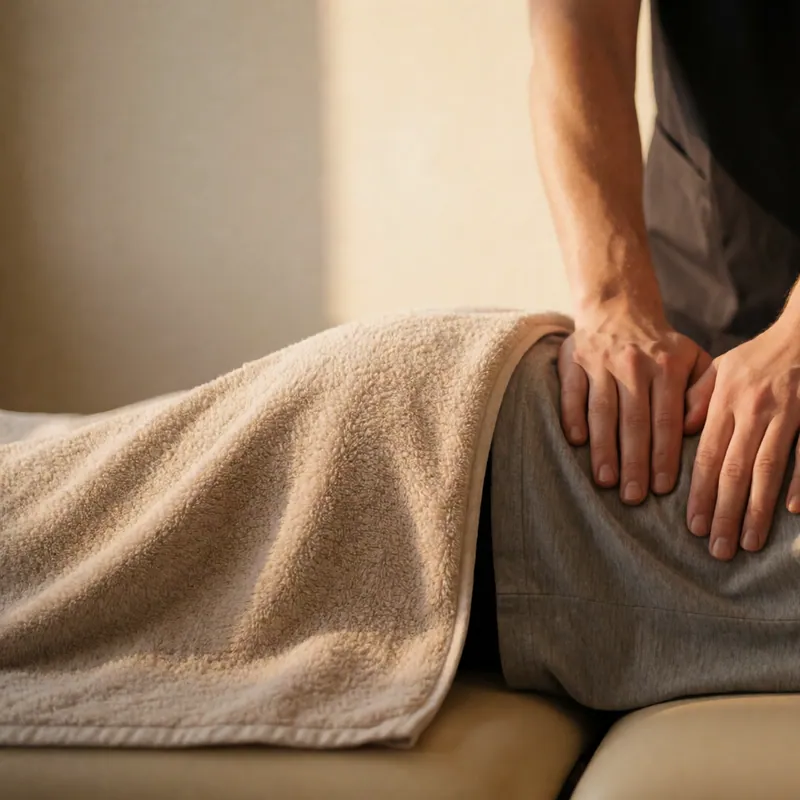
What the first appointment establishes
Whether this is mechanical back pain at all. That is the screening question and it comes first: unexplained weight loss, night pain that does not change with position, fever, a change in bladder or bowel control, progressive weakness or a history of cancer with new bone pain all mean we stop and send you to a physician the same day.
Then what actually provokes and eases it. Whether it hurts more bending forward or leaning back, whether sitting is worse than standing, whether the pain refers into the buttock or below the knee. Those patterns are what a treatment plan is built from, and they are worth more than any scan in a first presentation.
And what you cannot currently do. Not a pain score out of ten — the actual tasks. Getting your socks on, lifting the toddler, sitting through a shift, sleeping past four in the morning. Those are the measurements we repeat at visit four.
What the treatment actually is
Hands-on work where it earns its place: soft tissue work and joint mobilisation to reduce guarding and buy range. This is a means to the loading rather than the treatment itself, and we will say so plainly rather than letting you think the hands are the cure.
Then graded loading. Movements that go in the direction that eases you first, progressed towards the ones that currently do not, with weight added as you earn it. It is uncomfortable for the first fortnight in a fair number of cases and that is expected rather than a sign of harm.
And education that is not a lecture. What the pain means, what it does not mean, why hurt and harm are different things in a back that has been sore for six weeks, and why lying still is the one thing that reliably makes this worse.
Why we do not build the plan out of machines
The World Health Organization's 2023 guideline recommends against therapeutic ultrasound in routine care for chronic primary low back pain. NICE tells clinicians not to offer it for low back pain with or without sciatica. The Cochrane review found a small effect that was not clinically important.
Those machines persist because they bill well and need no clinician in the room. A plan built around them is a plan built around the billing, and the cost is the hour of supervised loading it displaced. We will use heat if it helps you get moving, and we will not charge you for it.
When the answer is not physical therapy
If nothing has changed by the visit-four reassessment, the plan changes or you go back to a physician. We are not going to book another block and hope. Direct access also runs out at ten visits or thirty days, which is a useful forcing function rather than an inconvenience.
And if the pattern was never mechanical, we should have caught that in the first hour. A back that hurts the same in every position, at night, in somebody losing weight, is not a back for a gym programme.
The machines are not the treatment. Ultrasound, most electrical stimulation and mechanical traction do not appear on our treatment plans as a matter of routine. The World Health Organization's 2023 guideline recommends against therapeutic ultrasound in routine care for chronic low back pain, NICE recommends against offering it for back pain with or without sciatica, and the Cochrane review found a small effect that was not clinically important. These machines survive because they bill well and need no clinician in the room, which is precisely the reason to be suspicious of a plan built around them.
Included as standard
How we treat this
Screening before treatment
Red flags checked as part of the history at the first appointment, not as a form at the desk. Anything urgent stops the session and we telephone your physician while you are still here.
Measurements you can hold us to
The tasks you cannot currently do, written down at visit one and repeated at visit four. Not a pain score — socks, stairs, sitting, sleep.
A written estimate of the course
How many visits we think this will take and what would change that, given to you at the first appointment.
Three or four exercises, not eleven
With sets, load and days. A programme nobody completes is a programme that does nothing, and eleven is how you get one.
Sixty minutes with the same clinician
One to one, same room, every visit. The person who measured you is the person who notices what changed.
Discharge on purpose
With the version of the programme that keeps you where you got to. No maintenance appointments you do not need.
When to make an appointment
Signs this is worth an assessment
- It has been sore for more than a fortnight and is not steadily improving.
- You have had several episodes and each one seems to take longer to settle.
- You are avoiding a specific thing — lifting, bending, a particular chair — and the list is growing.
- You were given a sheet of exercises, did them, and nothing changed.
- A scan report used words that frightened you and nobody explained what they meant.
- You are managing it with painkillers and would rather not be, indefinitely.
Low back pain — how long a course usually takes
- A typical course for a first episode of mechanical low back pain. Most people are meaningfully better inside three weeks, and the ones who are not are the reason we reassess at visit four rather than at visit ten.6 – 12 visits
This is a typical number of visits for this problem, not a quote and not a promise. You get an estimate specific to you, in writing, at the first appointment, and we reassess against the same measurements at visit four rather than at visit ten — so a course that is not working gets changed or stopped instead of extended. What each visit costs is published on the pricing page: $190 for the initial evaluation and $140 for a treatment visit if you are paying yourself, or your plan's copay if you are not. We do not sell blocks of visits in advance.
Questions we are actually asked
Low back pain — frequently asked
How long does physical therapy for low back pain take?
Typically six to twelve visits for a first episode of mechanical low back pain, and most people are meaningfully better inside three weeks. You get an estimate specific to you at the first appointment, and we reassess against the same measurements at visit four — so a course that is not working gets changed rather than extended.
Should I rest my back or keep moving?
Keep moving, within reason. Prolonged rest is one of the few things that reliably makes mechanical back pain worse and slower, and staying active is recommended by every major guideline on the subject. That does not mean pushing through everything — it means not shutting down, and we will be specific about which movements to keep and which to modify for a fortnight.
Do I need an MRI for back pain?
Usually not, and often it makes things worse rather than better. Disc bulges and degeneration are extremely common in people with no symptoms at all, so a scan can be entirely accurate and still not explain your pain — while the words on the report frighten people out of moving. Where a presentation genuinely warrants imaging we will recognise it and send you to somebody who can order it.
Do you use ultrasound or traction for back pain?
No, not as routine care. The WHO's 2023 guideline recommends against therapeutic ultrasound for chronic low back pain, NICE says not to offer it, and the evidence for mechanical traction is weak. We would rather spend the hour on loaded exercise, which is the part with durable evidence behind it.
Do I need a referral to be treated for back pain?
Not for most people. New York's direct access law allows treatment without a referral for ten visits or thirty days, whichever comes first. Workers' Compensation, No-Fault and Medicare each need a referral from the first visit.
Related conditions
Often seen alongside this
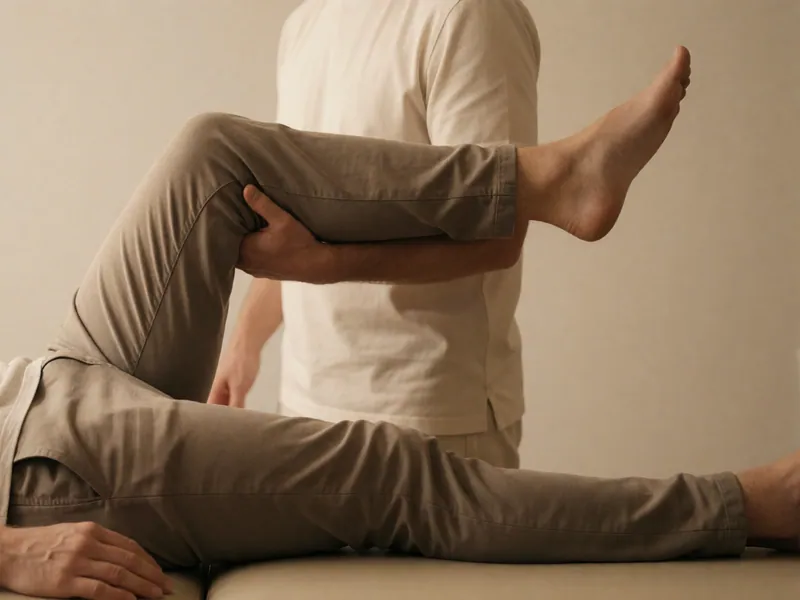
Sciatica
Pain down a leg is a symptom, not a diagnosis. Four different things cause it and they do not respond to the same treatment.
8 – 16 visits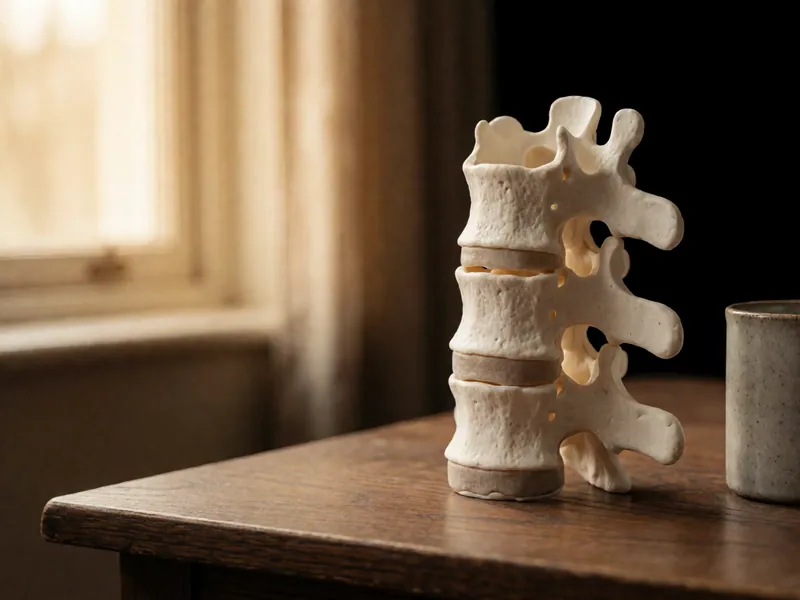
Herniated disc
The phrase that frightens people most and predicts their pain least. What the scan says, what it means, and what actually changes it.
8 – 16 visits
Spinal stenosis
When walking distance shrinks and leaning on a shopping trolley helps, the mechanism is specific and so is the treatment.
10 – 20 visits
Persistent pain
For pain that has outlasted the injury. Not a cure, not a lecture about it being in your head, and not something we will pretend is quick.
12 – 20 visitsSixty minutes, one to one, with the therapist you chose
Book an appointment
The booking page shows each therapist's own diary rather than a generic grid, so a slot you can see is a slot that is genuinely free. Most people do not need a doctor's referral to start — New York's direct access law runs to ten visits or thirty days — though Workers' Compensation, No-Fault and Medicare each need one from the first visit. If you are not sure which of those you are, telephone and we will work it out before you book.