
Balance, nerves and dizziness
Vertigo and dizziness
Most dizziness that responds to physical therapy comes from the inner ear, and a good deal of it is treatable in remarkably few visits. The first job is establishing which kind you have.
Dizziness is a word doing several jobs. Spinning that lasts seconds when you roll over in bed is one thing. Constant unsteadiness that is worse in busy visual environments is another. Light-headedness on standing is a third, and it is usually not a vestibular problem at all.
Separating them is the whole of the first appointment, because they have completely different treatments and one of them is not ours.

What responds well
Benign paroxysmal positional vertigo — brief, intense spinning triggered by specific head positions — is the most treatable dizziness there is, and it has its own page because it is frequently resolved in a single appointment.
Vestibular hypofunction, where one inner ear is under-performing after infection or injury, responds well to a graded programme of gaze stabilisation and habituation exercises. This is the classic vestibular rehabilitation caseload and three to eight visits is typical.
Persistent postural-perceptual dizziness, where unsteadiness has outlasted the original trigger and become self-sustaining, responds to graded exposure and takes longer.
What does not, and what we do about it
Light-headedness on standing is usually a blood-pressure problem and belongs with a physician. So does dizziness with palpitations, chest symptoms or fainting.
New dizziness with double vision, difficulty speaking or swallowing, severe unsteadiness with new weakness or numbness, or a sudden severe headache means an emergency assessment rather than an appointment here. We screen for this at the first visit and we would rather send ten people unnecessarily than miss one.
Migraine-associated dizziness needs medical management alongside anything we do, and we will say so.
The treatment when it is vestibular
Gaze stabilisation: exercises that deliberately provoke a controlled mismatch between what the inner ear and the eyes report, so the brain recalibrates. They are uncomfortable and they are supposed to be mildly so — the dose is the point.
Habituation: repeated, graded exposure to the movements that provoke symptoms, until they stop provoking them.
And balance retraining, because a vestibular system that has been unreliable for months has usually produced a person who has stopped moving their head, which makes everything worse.
When to stop and see a physician the same day. Some things are not ours to treat, and the useful skill is recognising them quickly. Unexplained weight loss, night pain that does not change with position, fever with back pain, a sudden change in bladder or bowel control, progressive weakness, a history of cancer with new bone pain, or trauma with a suspected fracture all mean we stop and send you to a physician the same day. We would far rather make that call ten times unnecessarily than miss it once.
Included as standard
How we treat this
The type established at visit one
Positional, hypofunction, persistent perceptual, or not vestibular at all. They have nothing in common therapeutically.
Screening for the emergencies
New double vision, speech or swallowing difficulty, new weakness or numbness, or sudden severe headache go to an emergency assessment.
Positional vertigo treated the same day
If that is what you have, we do not book you a course — we treat it, usually in the appointment you arrived for.
Exercises dosed rather than handed over
Gaze stabilisation is meant to provoke mild symptoms. Without the dose explained, people do it too gently to work or too hard to tolerate.
Head movement restored deliberately
Months of holding the head still is its own problem and it undoes much of the benefit if nobody addresses it.
Referral where medical management is needed
Migraine-associated dizziness and blood-pressure-related light-headedness need a physician alongside or instead.
When to make an appointment
Signs this is worth an assessment
- The room spins when you roll over in bed or tip your head back.
- You have felt persistently unsteady since an ear infection or a virus.
- Busy visual environments — supermarkets, crowds, scrolling — make you feel worse.
- You have stopped turning your head quickly and now hold it still without thinking.
- You feel unsteady walking in the dark or on uneven ground.
- You have had dizziness investigated and been told nothing is wrong, and it has not gone.
Vertigo & dizziness — how long a course usually takes
- A typical course for vestibular hypofunction. Positional vertigo frequently resolves in one to three visits, which is why it has its own page rather than being folded into this one.3 – 8 visits
This is a typical number of visits for this problem, not a quote and not a promise. You get an estimate specific to you, in writing, at the first appointment, and we reassess against the same measurements at visit four rather than at visit ten — so a course that is not working gets changed or stopped instead of extended. What each visit costs is published on the pricing page: $190 for the initial evaluation and $140 for a treatment visit if you are paying yourself, or your plan's copay if you are not. We do not sell blocks of visits in advance.
Questions we are actually asked
Vertigo & dizziness — frequently asked
Can physical therapy help vertigo?
For the common vestibular causes, yes and often quickly. Positional vertigo is frequently resolved in one to three visits. Vestibular hypofunction after an infection or injury typically takes three to eight. What physical therapy does not treat is dizziness from blood pressure, cardiac causes or migraine, and we screen for those first.
What kind of dizziness is not treated with physical therapy?
Light-headedness on standing, which is usually blood pressure. Dizziness with palpitations or fainting, which is cardiac until proven otherwise. And any new dizziness with double vision, speech or swallowing difficulty, new weakness or numbness, or sudden severe headache — that is an emergency assessment rather than an appointment.
Why do the exercises make me feel dizzy?
Because that is how they work. Gaze stabilisation deliberately provokes a controlled mismatch so the brain recalibrates, and mild symptoms during and shortly after are the dose rather than a side effect. Doing them gently enough to be comfortable is the commonest reason a home programme achieves nothing.
How many sessions will I need?
Three to eight for typical vestibular hypofunction. Positional vertigo is usually one to three, and if that is what you have we will treat it rather than book you a course. Persistent postural-perceptual dizziness takes longer and we will say so at the start.
I was told nothing is wrong but I still feel unsteady.
That is a common and frustrating position, and it does not mean the dizziness is imaginary. Persistent unsteadiness that has outlasted its original trigger is a recognised pattern, it is self-sustaining, and it responds to graded exposure rather than to further investigation.
Related conditions
Often seen alongside this
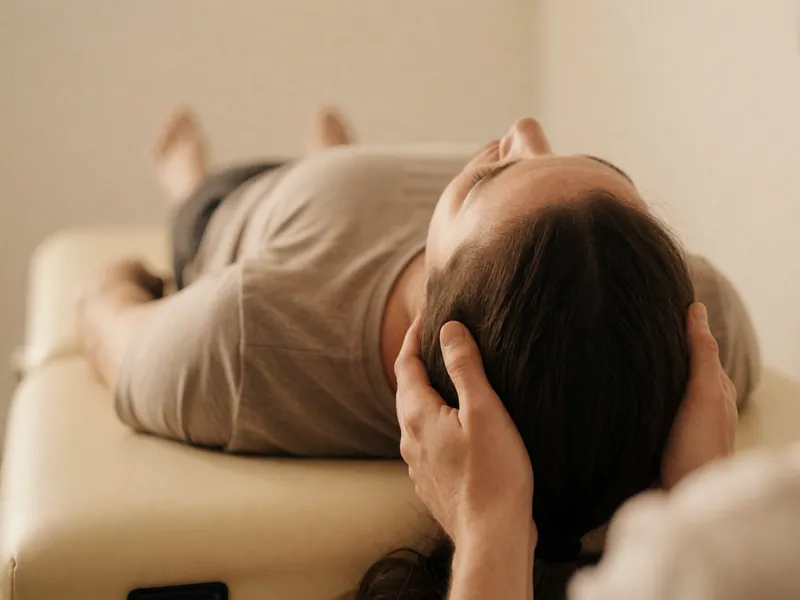
BPPV
The spinning that starts when you roll over in bed. It is caused by loose crystals in the inner ear and it is often fixed in a single appointment.
1 – 3 visits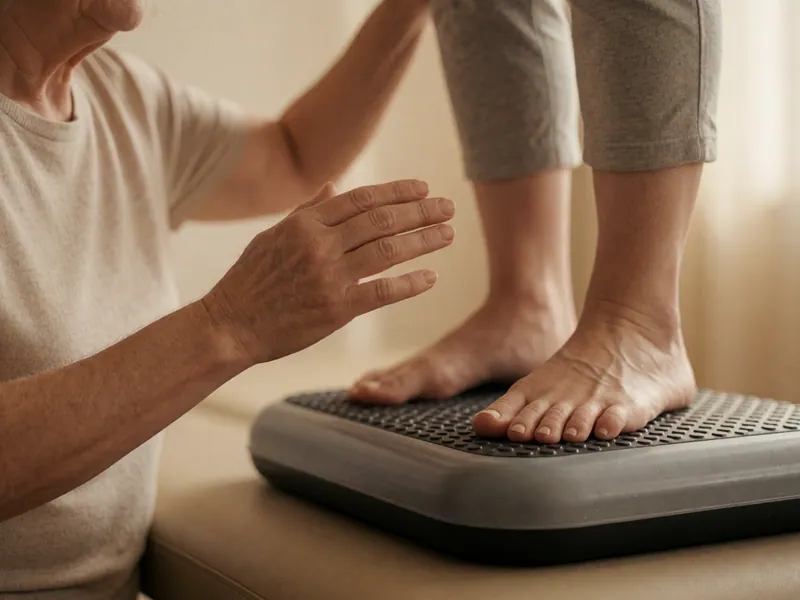
Balance & falls
Falling is not a consequence of age. It is a consequence of specific, measurable and largely trainable deficits, and we measure them.
12 – 24 visits
Neck pain
Desk necks, phone necks, slept-badly necks and the ones that are actually a shoulder. Telling them apart is most of the first appointment.
5 – 10 visits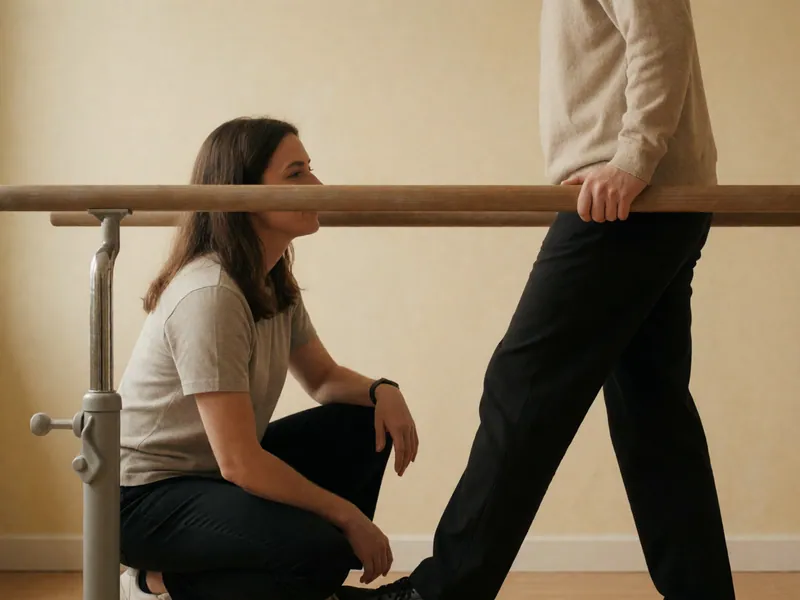
Stroke rehab
Recovery does not stop at six months. It slows, and what happens after that depends heavily on how much you actually practise.
24 – 48 visitsSixty minutes, one to one, with the therapist you chose
Book an appointment
The booking page shows each therapist's own diary rather than a generic grid, so a slot you can see is a slot that is genuinely free. Most people do not need a doctor's referral to start — New York's direct access law runs to ten visits or thirty days — though Workers' Compensation, No-Fault and Medicare each need one from the first visit. If you are not sure which of those you are, telephone and we will work it out before you book.