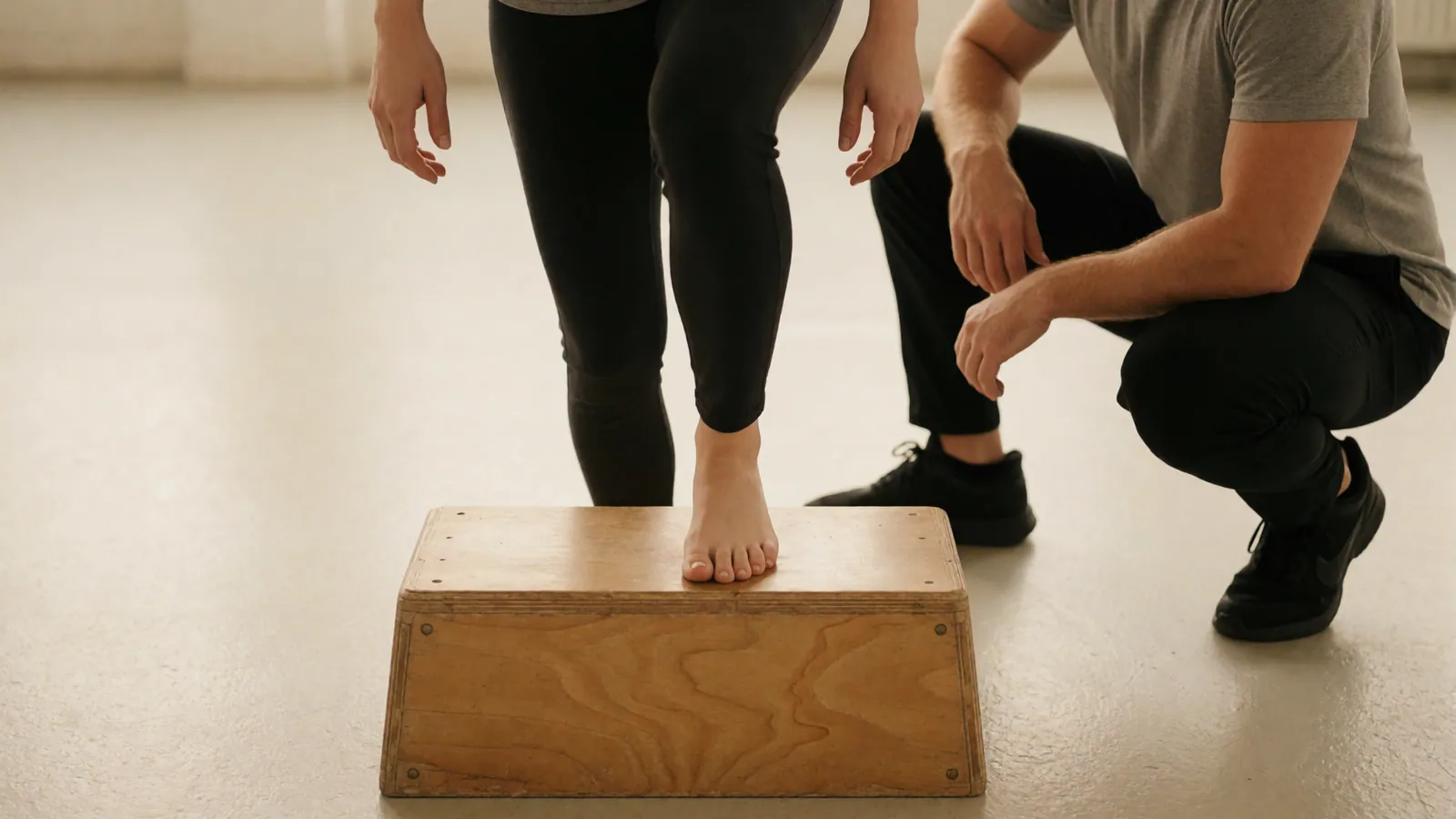
Joints, muscles and tendons
Knee pain
Stairs, kneeling, running, or the knee that hurts because of what the hip is not doing. All four get a different programme, and strength is the mechanism in every one of them.
Knee pain in adults is mostly one of three things: pain around the kneecap, degenerative joint pain, or a tendon problem at the front. All three produce discomfort on stairs and after sitting, which is why the history alone rarely settles it.
What they share is that the treatment with the best evidence is strengthening, and that strength gains take a minimum of six weeks to appear whatever anybody promises. A clinic offering a quick fix for knee pain is offering something other than the thing that works.
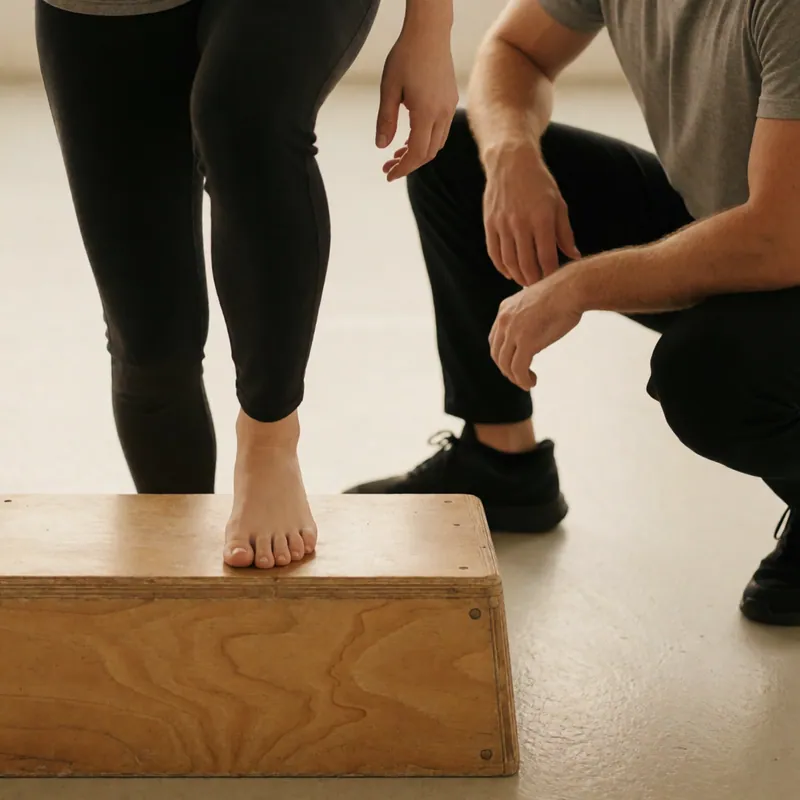
Why we examine your hip
A knee is at the end of a chain. If the hip abductors are not controlling the thigh, the knee absorbs the difference on every step, and no amount of work directed at the knee itself changes that.
This is particularly true of pain around the kneecap, where hip strengthening frequently outperforms knee-focused exercise. It is also the most commonly missed thing in self-directed rehabilitation, because the sore part is not the part that needs training.
Degenerative knee pain, honestly
Osteoarthritis on an X-ray is common with age and correlates poorly with symptoms — plenty of knees with significant changes are comfortable and plenty of painful knees look unremarkable. So the picture is not the plan.
Exercise therapy has good evidence for symptomatic knee osteoarthritis and it is recommended as first-line care by essentially every guideline on the subject. It does not reverse the joint changes. It reliably improves pain and function, which is what people came for.
Where a knee genuinely needs replacing we will say so, and we will tell you that prehabilitation before the operation measurably improves the recovery after it.
The programme
Quadriceps and hip strengthening, loaded properly. This is the whole substance and the commonest reason home attempts fail is that the load was too light to produce adaptation.
Then the specific task: stairs trained as stairs, kneeling trained as kneeling, running rebuilt with graded exposure. Strength that does not transfer to the thing you cannot do has not finished.
And a frank conversation about load management for tendon problems, where the amount of running or jumping matters more than any exercise we give you.
The machines are not the treatment. Ultrasound, most electrical stimulation and mechanical traction do not appear on our treatment plans as a matter of routine. The World Health Organization's 2023 guideline recommends against therapeutic ultrasound in routine care for chronic low back pain, NICE recommends against offering it for back pain with or without sciatica, and the Cochrane review found a small effect that was not clinically important. These machines survive because they bill well and need no clinician in the room, which is precisely the reason to be suspicious of a plan built around them.
Included as standard
How we treat this
The hip examined as a cause
Because the knee is at the end of a chain and hip strength frequently outperforms knee-focused exercise for kneecap pain.
Load heavy enough to produce adaptation
The commonest reason a home programme does nothing. Light resistance that looks prudent frequently does nothing at all.
The specific task trained
Stairs as stairs, kneeling as kneeling. Strength that does not transfer to the thing you cannot do is not finished.
Honest timescales on strength
Six weeks minimum before gains appear, whatever anybody promises. We would rather say that at visit one.
X-ray findings kept in proportion
Joint changes are common with age and correlate poorly with symptoms. The picture is not the plan.
Prehabilitation where surgery is coming
Strength before a knee replacement measurably improves the recovery after it, and it is the cheapest thing you can do.
When to make an appointment
Signs this is worth an assessment
- Stairs — particularly going down — have become something you think about.
- It aches after sitting for a while and eases once you get moving.
- You have swelling that comes and goes with activity.
- It gives way, catches or locks.
- You have been told it is arthritis and left to get on with it.
- You have started running and the knee has started complaining about it.
Knee pain — how long a course usually takes
- A typical course for patellofemoral or degenerative knee pain. Strength gains are the mechanism and they take a minimum of six weeks to appear whatever anybody promises.6 – 14 visits
This is a typical number of visits for this problem, not a quote and not a promise. You get an estimate specific to you, in writing, at the first appointment, and we reassess against the same measurements at visit four rather than at visit ten — so a course that is not working gets changed or stopped instead of extended. What each visit costs is published on the pricing page: $190 for the initial evaluation and $140 for a treatment visit if you are paying yourself, or your plan's copay if you are not. We do not sell blocks of visits in advance.
Questions we are actually asked
Knee pain — frequently asked
How long does knee physical therapy take?
Typically six to fourteen visits. Strength is the mechanism in almost every knee problem and strength gains take a minimum of six weeks to appear, so a course that produces durable change runs over months rather than weeks.
Can physical therapy help knee arthritis?
Yes, and it is recommended as first-line treatment by essentially every guideline on the subject. It does not reverse the joint changes — nothing conservative does — but it reliably improves pain and function, which is what people actually come in for.
Why are you giving me hip exercises for knee pain?
Because the knee is at the end of a chain, and if the hip is not controlling the thigh the knee absorbs the difference on every step. For pain around the kneecap in particular, hip strengthening frequently outperforms exercise aimed at the knee itself.
Should I use a knee brace?
Occasionally and temporarily. A brace can help confidence during a specific activity while strength is being rebuilt. What it does not do is treat anything, and a knee that relies on one indefinitely is a knee that has not been trained.
Is my X-ray telling me I need a knee replacement?
Not on its own. Joint changes on X-ray are common with age and correlate poorly with symptoms — plenty of knees with significant changes are comfortable. What decides a replacement is function and pain that have not responded to a proper course of exercise, and we will tell you honestly when we think you are there.
Related conditions
Often seen alongside this
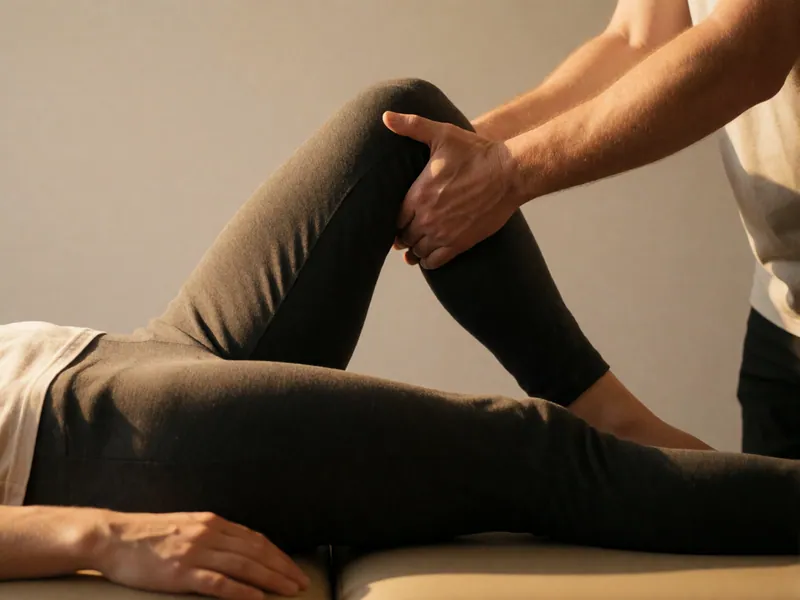
Hip pain
True hip pain is felt in the groin. Pain on the outside of the hip is usually a tendon, and it is made worse by exactly the stretch people are given for it.
8 – 16 visits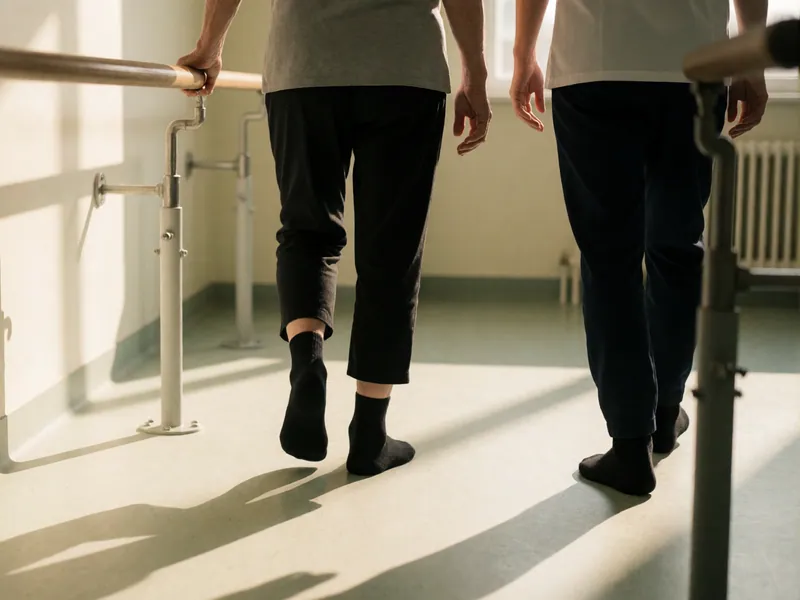
Knee replacement
The first six weeks decide the range of motion you keep. This is the rehabilitation where showing up early matters most.
16 – 24 visits
ACL reconstruction
Nine to twelve months, criteria-based, and the single rehabilitation where returning early is measurably dangerous rather than merely unwise.
30 – 50 visits
Strains & tears
Hamstrings, calves and groins. The reinjury rate is high and it is high because people return to sport on how it feels rather than on what it can do.
6 – 14 visitsSixty minutes, one to one, with the therapist you chose
Book an appointment
The booking page shows each therapist's own diary rather than a generic grid, so a slot you can see is a slot that is genuinely free. Most people do not need a doctor's referral to start — New York's direct access law runs to ten visits or thirty days — though Workers' Compensation, No-Fault and Medicare each need one from the first visit. If you are not sure which of those you are, telephone and we will work it out before you book.