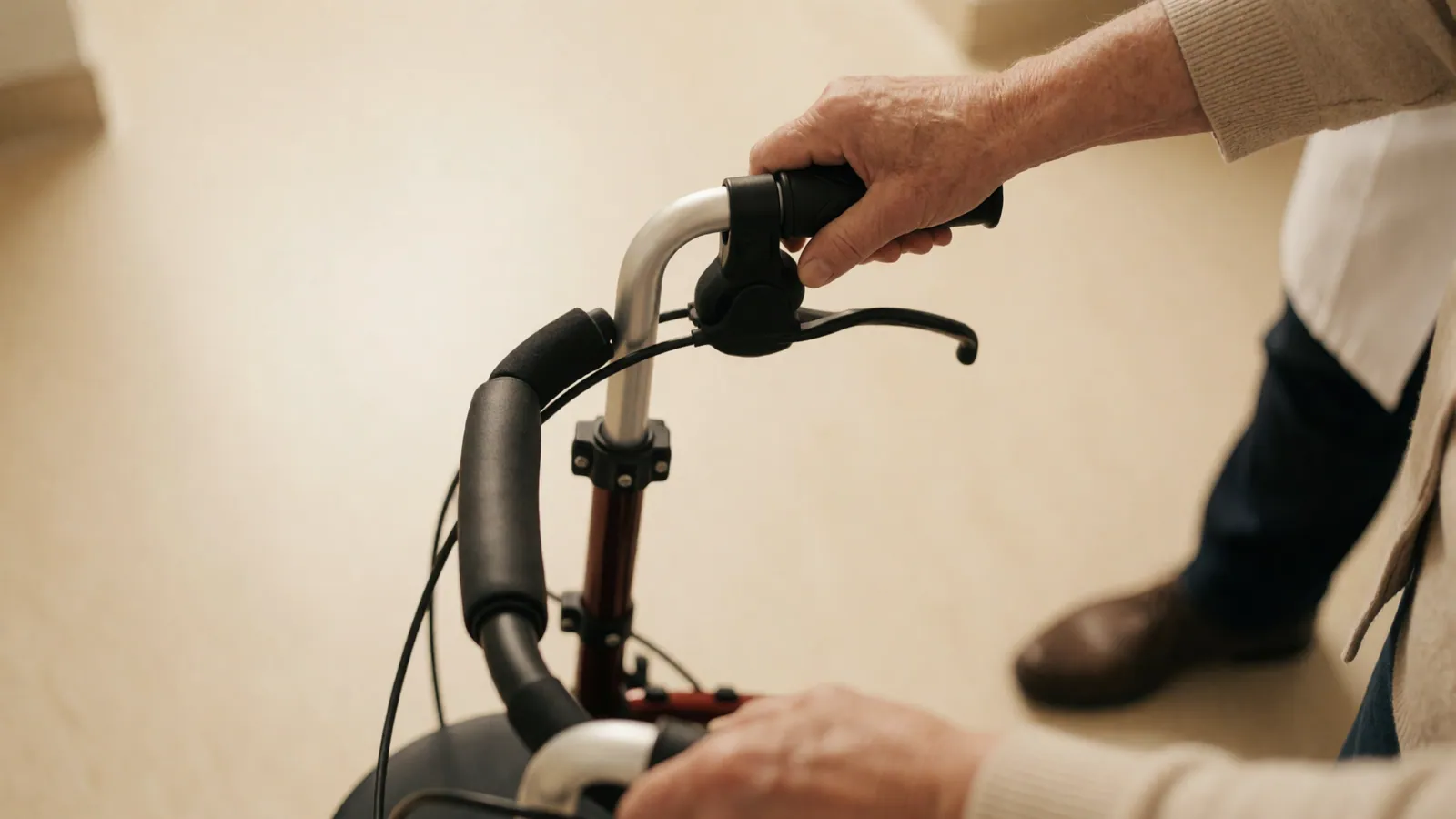
Back, neck and spine
Spinal stenosis
When walking distance shrinks and leaning on a shopping trolley helps, the mechanism is specific and so is the treatment. Progress here is counted in blocks walked, not in pain scores.
Lumbar spinal stenosis is narrowing of the space the nerves travel through, usually from a combination of age-related changes. The characteristic story is unmistakable once you have heard it a few times: walking brings on leg heaviness, aching or weakness after a predictable distance, sitting down relieves it within minutes, and leaning forward — on a trolley, on a counter, over a bicycle — lets you go considerably further.
The reason is mechanical. Bending forward opens the space; standing upright and extending closes it. That is also why the treatment works, and why a programme designed for a disc problem will make a stenosis patient worse.
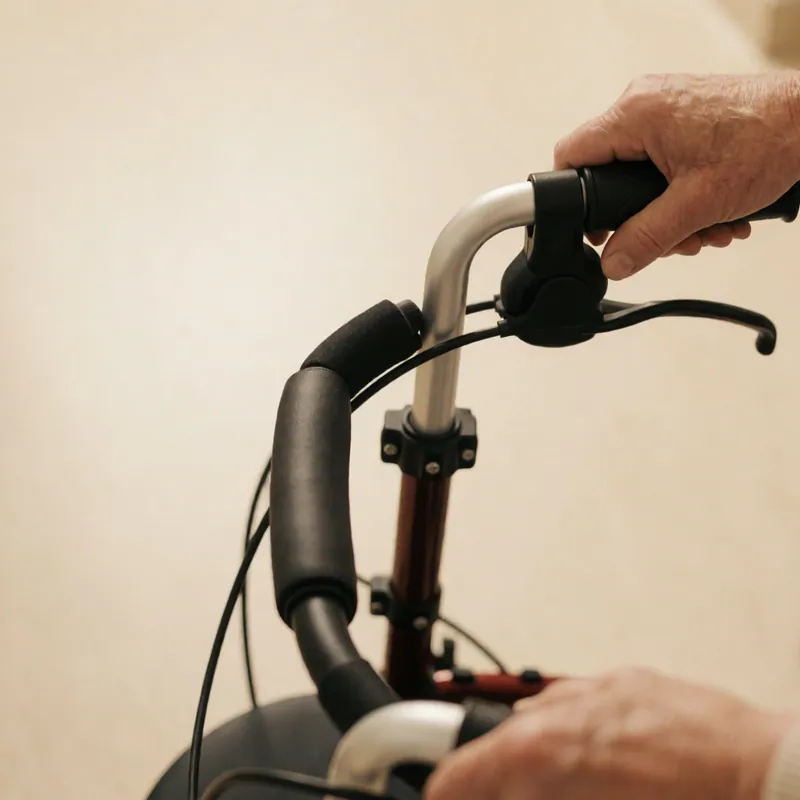
Why the trolley helps, and what follows from it
Flexion opens the canal and the foramina. Extension closes them. So a patient who can walk twice as far leaning on a trolley has just given you both the diagnosis and the treatment principle in one observation.
It means the programme is built around flexion-based positions and around building tolerance in them: cycling rather than treadmill walking early on, inclined walking rather than flat, and specific work to reduce the extension load the spine sits in all day.
It also means the standard advice for back pain — stand tall, avoid slouching, extend more — is actively wrong for this condition. People arrive here having been given it, and having got worse.
What we measure
Walking distance before symptoms start, and walking distance before you have to stop. Both, timed or counted in blocks, at visit one and repeated. It is the only measure that matters to the person living with this.
Not the scan. Canal dimensions correlate poorly with symptoms and they are not going to change; treating the number rather than the walking distance is how somebody ends up frightened by a millimetre measurement that has been the same for a decade.
What the programme contains
Flexion-biased mobility and positional work, taught properly and done at home.
Cardiovascular conditioning in a position you tolerate — a stationary bicycle is the standard answer and it is a good one, because it lets you work aerobically for twenty minutes in the position that opens the canal.
Hip and trunk strengthening, because the deconditioning that follows a year of reduced walking is frequently doing as much damage to the distance as the stenosis itself.
And a graded walking programme, progressed on distance rather than on how it felt.
Honesty about what this does and does not change
Physical therapy does not widen the canal. Nothing conservative does. What it changes is how far you can walk before the narrowing matters, which for most people is the thing they actually want.
For some people it is not enough, and decompression surgery is a genuinely good operation for the right patient. We will tell you if we think a surgical opinion is worth having, and we will tell you if we think a well-run conservative course has more to give first.
No referral needed to start — for ten visits or thirty days. New York lets a physical therapist treat you without a doctor's referral for ten visits or thirty days, whichever runs out first, provided the therapist has been licensed at least three years. Every clinician here qualifies. After that limit the law requires a referral from a physician, podiatrist, dentist or nurse practitioner before treatment continues — and we will have raised it with you well before you reach it rather than on the day. Two things people are rarely told: an evaluation on its own does not spend one of the ten, and direct access does not apply to Workers' Compensation, No-Fault or Medicare, all of which need a referral from the first visit.
Included as standard
How we treat this
Walking distance measured, not estimated
Before symptoms and before you stop, at visit one and repeated. It is the number that matters to you and it is the number we work to.
A flexion-biased programme
Built on the mechanism rather than on generic back advice — which for this condition frequently makes things worse.
Conditioning in a position you tolerate
Usually a bicycle. Twenty aerobic minutes in the position that opens the canal is worth more than five painful ones upright.
Deconditioning treated as part of the problem
A year of reduced walking costs strength, and that strength is a large share of the lost distance.
A graded walking plan
Progressed on distance rather than on feel, so the increments are real.
An honest view on surgery
Decompression is a good operation for the right patient. We will say when we think the opinion is worth having.
When to make an appointment
Signs this is worth an assessment
- You can predict, fairly accurately, how far you can walk before your legs start complaining.
- Leaning on a shopping trolley, a counter or a bicycle lets you go considerably further.
- Sitting down relieves it within a few minutes, reliably.
- Standing still in a queue is worse than walking.
- Your walking distance has shrunk noticeably over the last year or two.
- You have been given back exercises based on standing tall and extending, and they made it worse.
Spinal stenosis — how long a course usually takes
- A typical course aimed at walking tolerance rather than at the scan. Progress is measured in blocks walked before symptoms start.10 – 20 visits
This is a typical number of visits for this problem, not a quote and not a promise. You get an estimate specific to you, in writing, at the first appointment, and we reassess against the same measurements at visit four rather than at visit ten — so a course that is not working gets changed or stopped instead of extended. What each visit costs is published on the pricing page: $190 for the initial evaluation and $140 for a treatment visit if you are paying yourself, or your plan's copay if you are not. We do not sell blocks of visits in advance.
Questions we are actually asked
Spinal stenosis — frequently asked
Can physical therapy fix spinal stenosis?
It does not widen the canal — nothing conservative does. What it changes is how far you can walk before the narrowing matters, which for most people is what they actually came for. A typical course here is ten to twenty visits and progress is measured in walking distance rather than in pain scores.
Why can I walk further leaning on a shopping trolley?
Because bending forward opens the space the nerves travel through and standing upright closes it. That single observation gives both the diagnosis and the treatment principle, and it is why the programme is built around flexion rather than around the standing-tall advice usually given for back pain.
Do I need surgery for spinal stenosis?
Not necessarily, and a well-run conservative course is a reasonable first step for most people. Decompression surgery is a genuinely effective operation for the right patient, and if we think that opinion is worth having we will say so rather than keep treating.
Is a stationary bike better than walking for me?
Early on, usually yes — it lets you work aerobically for twenty useful minutes in the position that opens the canal, rather than five uncomfortable ones upright. As tolerance improves, we add graded walking progressed on distance.
Why did standing-tall exercises make my back worse?
Because extension closes the space in a stenotic spine. Generic back advice built around extension is reasonable for some conditions and actively wrong for this one, and people arrive here having followed it diligently and lost ground.
Related conditions
Often seen alongside this
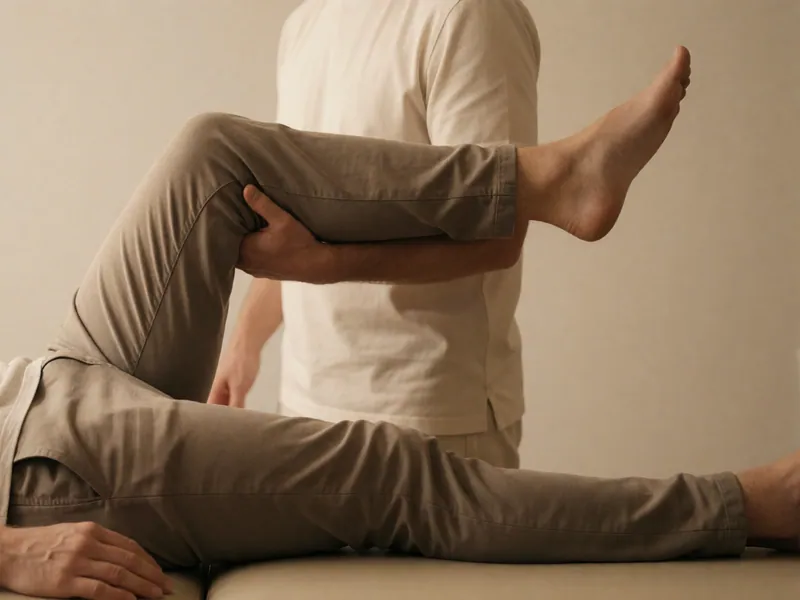
Sciatica
Pain down a leg is a symptom, not a diagnosis. Four different things cause it and they do not respond to the same treatment.
8 – 16 visits
Low back pain
The most common reason anybody walks through this door, and the condition where the gap between what sells and what works is widest.
6 – 12 visits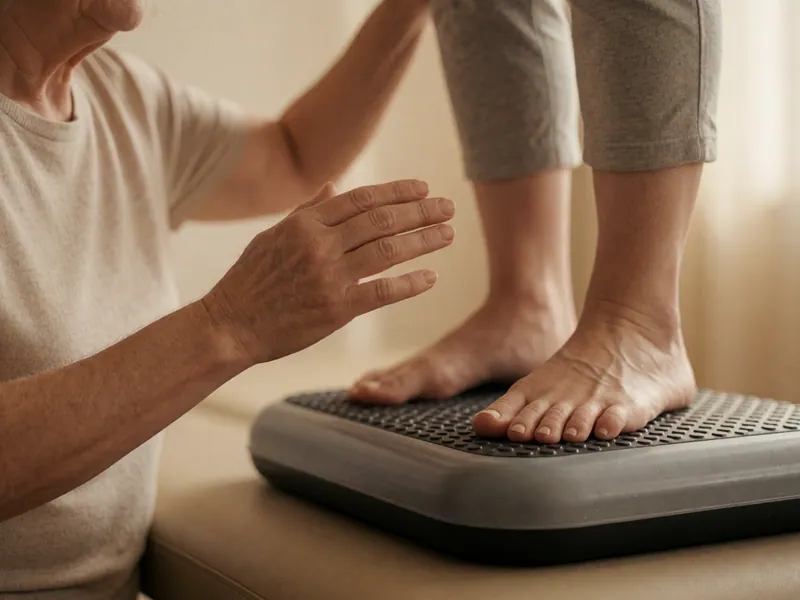
Balance & falls
Falling is not a consequence of age. It is a consequence of specific, measurable and largely trainable deficits, and we measure them.
12 – 24 visits
Older adults
Strength training works at eighty. It works at ninety. The dose that works is heavier than almost anybody is offered.
12 – 24 visitsSixty minutes, one to one, with the therapist you chose
Book an appointment
The booking page shows each therapist's own diary rather than a generic grid, so a slot you can see is a slot that is genuinely free. Most people do not need a doctor's referral to start — New York's direct access law runs to ten visits or thirty days — though Workers' Compensation, No-Fault and Medicare each need one from the first visit. If you are not sure which of those you are, telephone and we will work it out before you book.