Balance, nerves and dizziness
Physical therapy for Parkinson's disease
Big, effortful, deliberately exaggerated movement, practised often. It does not slow the disease and it does change what you can do.
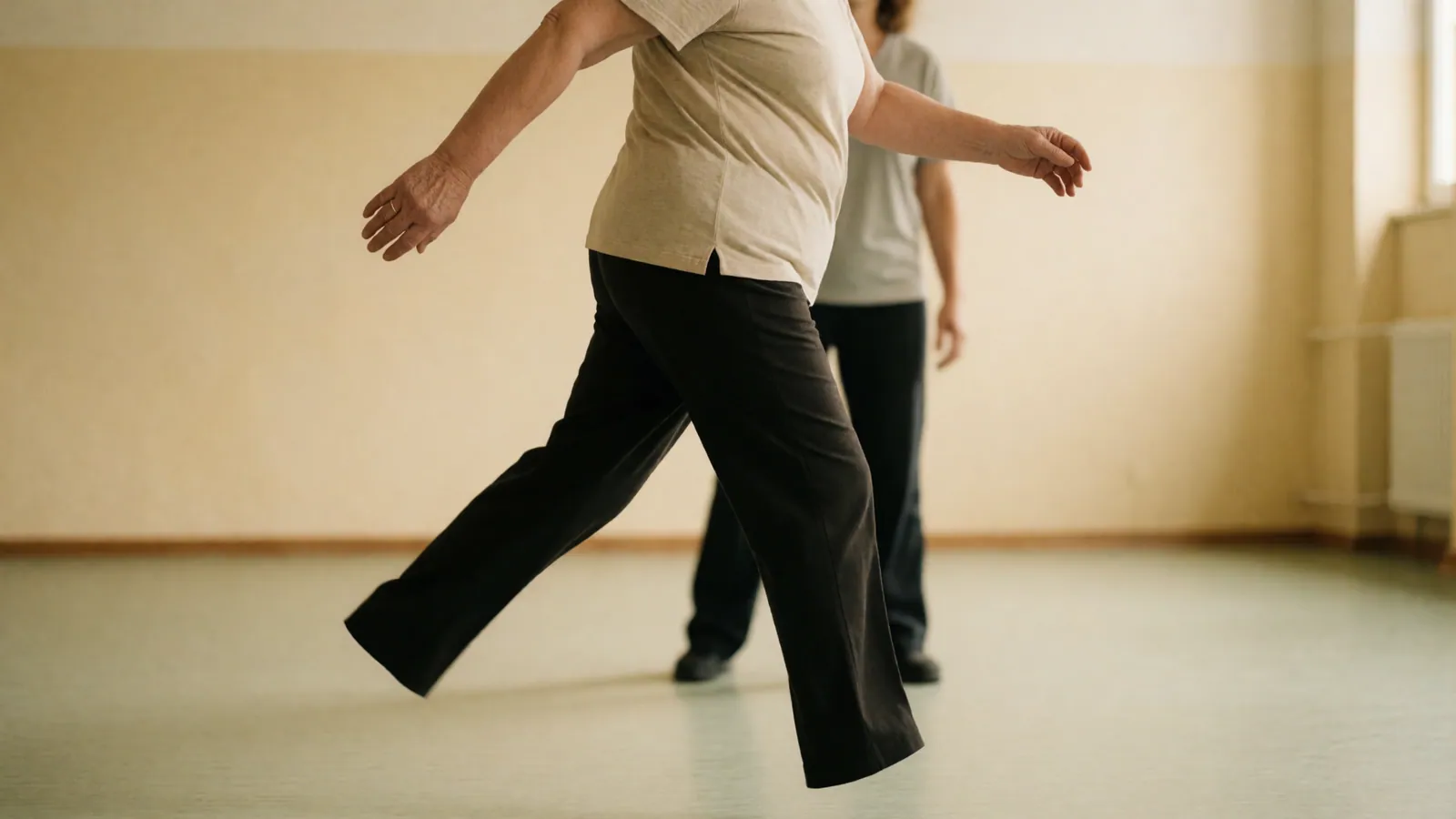
Parkinson's produces movements that shrink. Steps get shorter, arm swing reduces, handwriting gets smaller, and the person doing it frequently does not perceive the reduction — a movement that feels normal-sized is measurably not.
That mismatch is what the treatment targets. Practising deliberately large, effortful movement recalibrates the sense of how big is big enough, and it transfers to walking, turning and getting out of chairs.
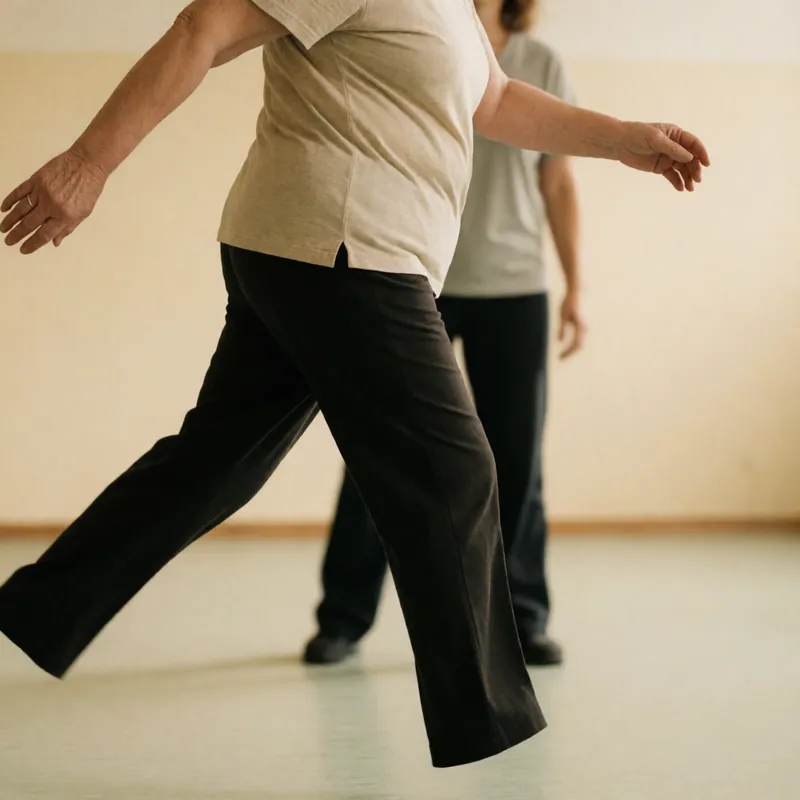
Why it has to be exaggerated
If you practise at the size that feels normal, you practise the shrunken version. The whole mechanism depends on going considerably bigger than feels right — steps that feel absurdly long, arm swings that feel theatrical — until the recalibrated version becomes the default.
It feels ridiculous for the first few sessions and people say so. It is also why a self-directed version usually underperforms: without somebody outside your own perception telling you it is still too small, you drift back to what feels right.
What we work on
Walking: step length, speed, arm swing, and turning — which is where a great many falls happen and which responds to a specific strategy rather than to general practice.
Freezing, where the feet stop and the body keeps going. Cueing strategies — auditory, visual, rhythmic — help a great deal and they are individual, so finding which one works for you is part of the job.
Balance and falls risk, which is elevated and is a major determinant of independence.
And strength, because the deconditioning that accumulates alongside the disease is treatable even where the disease is not.
Blocks, not a continuous course
Gains fade without maintenance. That is a real feature of this condition rather than a failure of treatment, and pretending otherwise leads to disappointment at month five.
So we plan in blocks: an intensive period, a maintenance programme you run yourself, and a return block when the measurements say it is time. Usually once or twice a year. Planning it that way from the first appointment makes the allowance work and sets the right expectation.
What we do not claim
Exercise does not slow the progression of Parkinson's disease and we are not going to tell you it does. There is research interest in that question and it is not settled.
What is well supported is that it improves walking, balance and function while you are doing it, and that those improvements matter a great deal to daily life. That is a real claim and it is enough.
Your plan's visit cap, checked before you start. Most commercial plans cap physical therapy visits per calendar year, and the cap is frequently lower than the course of treatment a condition needs. We check your benefit before the first visit rather than after the sixth, we tell you the number, and we plan the course around it — front-loading the hands-on work and handing you more of the programme to run yourself if the arithmetic says we should.
Included as standard
How we treat this
Deliberately large-amplitude practice
Bigger than feels right, because what feels normal is already the shrunken version.
An outside eye on movement size
The reason a self-directed version underperforms: you cannot judge your own amplitude, by definition.
Turning trained specifically
Where a great many falls happen, and it responds to a strategy rather than to general practice.
Cueing strategies for freezing
Auditory, visual or rhythmic. Which one works is individual and finding yours is part of the job.
Planned in blocks from the start
An intensive period, a maintenance programme, and a return block when the measurements say so. Usually once or twice a year.
No claim about progression
Exercise improves what you can do. Whether it slows the disease is unsettled and we will not imply otherwise.
When to make an appointment
Signs this is worth an assessment
- Your steps have got shorter or you have started shuffling.
- You freeze in doorways or when turning.
- Your arm swing has reduced on one side.
- Getting out of a chair or turning in bed has become difficult.
- You have fallen, or nearly fallen, more than once.
- You completed a programme a year ago and have noticed things slipping back.
Parkinson's — how long a course usually takes
- A typical course, usually repeated as a block once or twice a year rather than run continuously. Gains fade without maintenance and we plan for that from the first visit.16 – 32 visits
This is a typical number of visits for this problem, not a quote and not a promise. You get an estimate specific to you, in writing, at the first appointment, and we reassess against the same measurements at visit four rather than at visit ten — so a course that is not working gets changed or stopped instead of extended. What each visit costs is published on the pricing page: $190 for the initial evaluation and $140 for a treatment visit if you are paying yourself, or your plan's copay if you are not. We do not sell blocks of visits in advance.
Questions we are actually asked
Parkinson's — frequently asked
Does exercise slow down Parkinson's disease?
That is not settled, and we will not tell you it does. What is well supported is that physical therapy improves walking, balance and daily function while you are doing it, and those improvements matter a great deal. That is a real claim and it does not need embellishing.
Why do the exercises feel exaggerated?
Because they have to be. Parkinson's shrinks movement without the person perceiving the reduction, so practising at the size that feels normal practises the shrunken version. Going deliberately bigger than feels right is the mechanism, and it feels ridiculous for the first few sessions.
Will I need to come back?
Probably, and we plan for it from the start. Gains fade without maintenance, which is a feature of the condition rather than a failure of treatment. Most people do an intensive block, run a maintenance programme themselves, and return once or twice a year when the measurements say so.
What helps with freezing?
Cueing — auditory, visual or rhythmic — helps a great deal, and which one works is individual. Finding yours and building it into the situations where you freeze is a specific part of the programme rather than general advice.
Can I do this at home instead?
Partly, and the home programme is essential. What it cannot replace is somebody outside your own perception telling you the movement is still too small — that is precisely the thing the condition makes you unable to judge for yourself.
Related conditions
Often seen alongside this
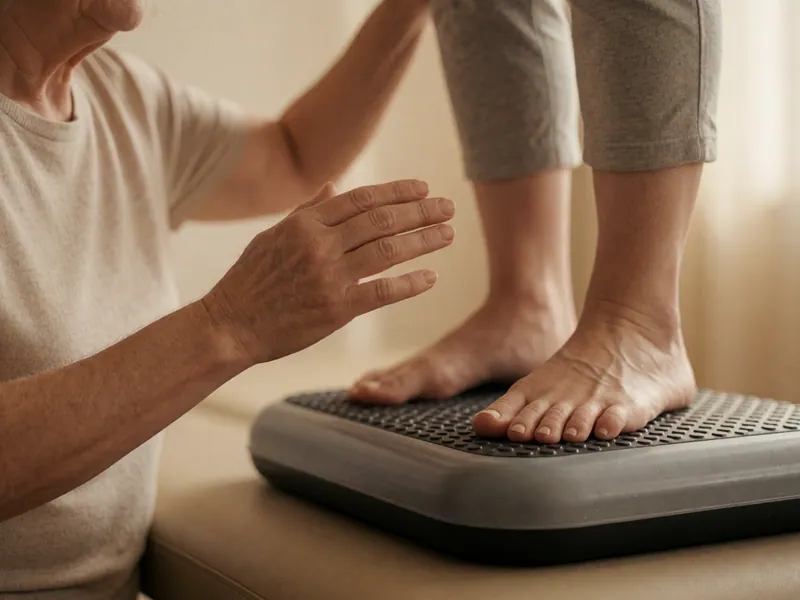
Balance & falls
Falling is not a consequence of age. It is a consequence of specific, measurable and largely trainable deficits, and we measure them.
12 – 24 visits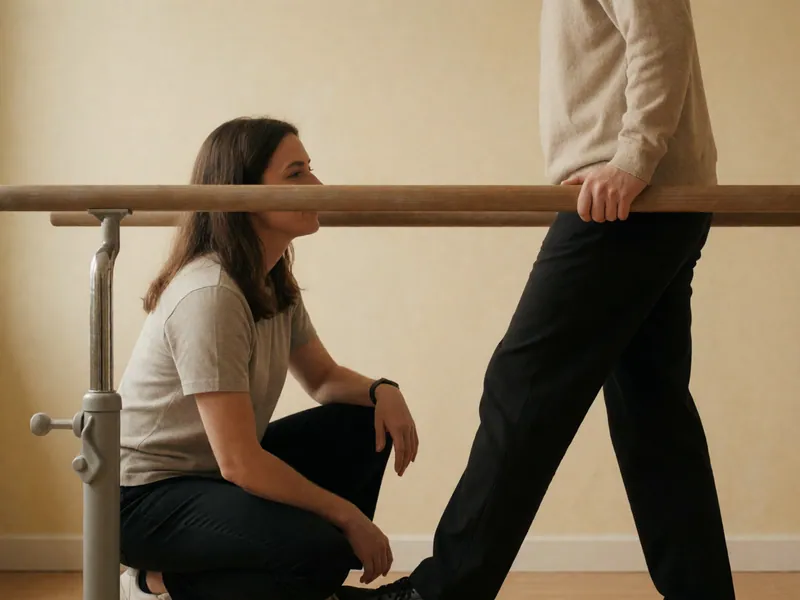
Stroke rehab
Recovery does not stop at six months. It slows, and what happens after that depends heavily on how much you actually practise.
24 – 48 visits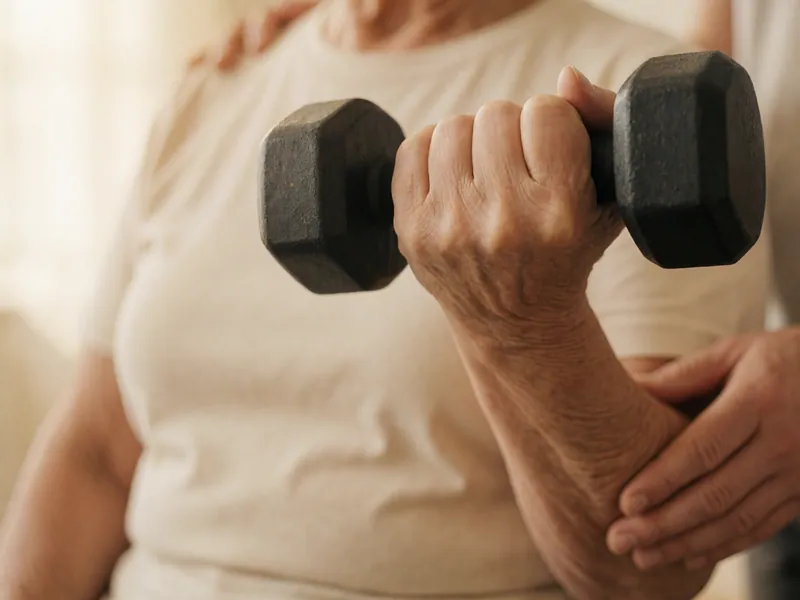
Older adults
Strength training works at eighty. It works at ninety. The dose that works is heavier than almost anybody is offered.
12 – 24 visits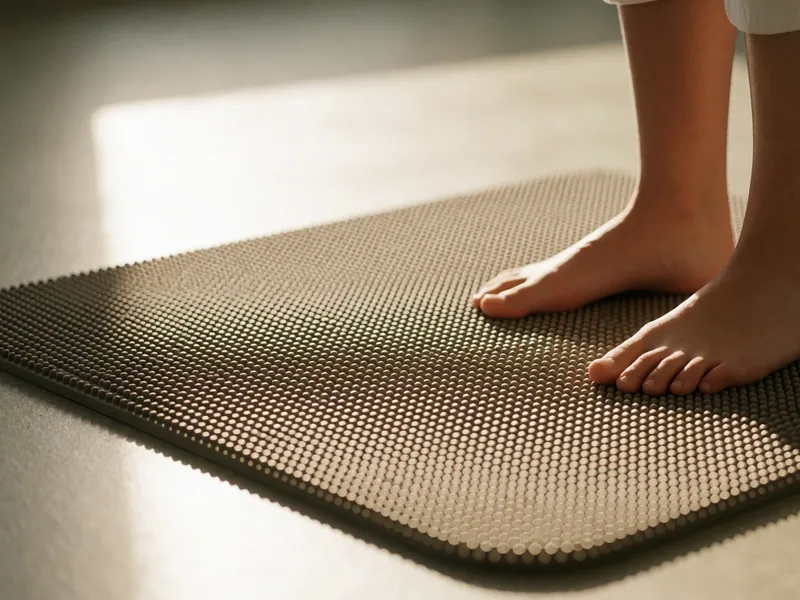
Neuropathy
When sensation is unreliable, balance has to be rebuilt on the senses that still work. That is trainable even when the nerve is not.
10 – 20 visitsSixty minutes, one to one, with the therapist you chose
Book an appointment
The booking page shows each therapist's own diary rather than a generic grid, so a slot you can see is a slot that is genuinely free. Most people do not need a doctor's referral to start — New York's direct access law runs to ten visits or thirty days — though Workers' Compensation, No-Fault and Medicare each need one from the first visit. If you are not sure which of those you are, telephone and we will work it out before you book.