
Programmes and populations
Physical therapy for older adults
Strength training works at eighty. It works at ninety. The dose that works is considerably heavier than almost anybody is offered.
The commonest thing we correct in older patients is not an injury, it is a programme. Somebody has been given a resistance band and a set of movements light enough to be obviously safe, has done them diligently for three months, and is no stronger — because the load was never enough to produce an adaptation.
Muscle responds to meaningful load at every age. The research on progressive resistance training in people in their eighties and nineties is consistent and it is not marginal: strength improves substantially, and with it the ability to get out of a chair, climb stairs and recover from a stumble.

Why light is not the same as safe
A resistance light enough to look prudent is frequently light enough to do nothing, and a programme that does nothing is not safe — it is three months during which somebody continued to get weaker while believing they were addressing it.
The genuinely safe approach is proper supervision, correct technique, and progressive load that is increased as it is earned. That takes a clinician watching, which is the argument for the hour rather than the argument against the weight.
We are patient about the fortnight it usually takes to persuade somebody of this, and we do it by showing them the numbers rather than by asserting it.
What we measure
Sit-to-stand repetitions in thirty seconds. Gait speed over a marked distance. Single-leg stance time. Grip strength where relevant. Repeated every few weeks and shown to you.
These are better predictors of independence than almost anything else available, they respond to training, and watching them move is the most persuasive thing in this building.
The functional target, not the generic one
The stairs in your actual building rather than the ones in a textbook. Getting off your actual sofa, which is probably lower than the plinth here. Carrying shopping the distance you actually carry it. Getting up off the floor, which is the one nobody trains and everybody needs.
We ask what your entrance looks like and how many steps there are, because a discharge that works here and fails at your front door is not a discharge.
The Medicare arithmetic
Most of this caseload is on Medicare, and the therapy threshold gets misdescribed as a cap. It is not one: past $2,480 for 2026 we add the KX modifier and document medical necessity, and the benefit continues.
If somebody has told you your therapy benefit has run out, that is very likely a statement about a clinic's paperwork appetite rather than about Medicare. We have a page about it.
$2,480 is a paperwork threshold, not the end of your benefit. Medicare's therapy threshold for 2026 is $2,480 for physical therapy and speech-language pathology combined. It is a documentation threshold and not a cap: past it we add the KX modifier and record why continued treatment is medically necessary, and your benefit carries on. A clinic that discharges you the week you approach that number is describing its own paperwork policy rather than a rule from Medicare.
Included as standard
How we treat this
Load heavy enough to produce adaptation
Progressive, supervised and increased as it is earned. Light enough to look prudent is frequently light enough to do nothing.
Measured every few weeks and shown to you
Sit-to-stand, gait speed and single-leg stance. Watching the numbers move is the most persuasive thing here.
Your actual stairs and your actual sofa
Rather than generic ones. We ask what your entrance looks like and how low your chair is.
Getting up off the floor, trained
The one thing nobody practises and everybody eventually needs.
An hour, one to one
Which is what makes proper supervision of meaningful load possible in the first place.
The Medicare threshold explained properly
It is a documentation trigger, not a cap, and your benefit continues past it.
When to make an appointment
Signs this is worth an assessment
- Getting out of a low chair has become something you plan for.
- You have noticed you take stairs one at a time, or use the rail where you did not.
- Your walking distance has dropped over the last year or two.
- You have done a programme of light band exercises and are no stronger.
- You have had a fall, or have started worrying about one.
- You have been told your Medicare therapy benefit has run out.
Older adults — how long a course usually takes
- A typical course. The commonest error we correct is undertraining — resistance light enough to be safe-looking is also light enough to do nothing.12 – 24 visits
This is a typical number of visits for this problem, not a quote and not a promise. You get an estimate specific to you, in writing, at the first appointment, and we reassess against the same measurements at visit four rather than at visit ten — so a course that is not working gets changed or stopped instead of extended. What each visit costs is published on the pricing page: $190 for the initial evaluation and $140 for a treatment visit if you are paying yourself, or your plan's copay if you are not. We do not sell blocks of visits in advance.
Questions we are actually asked
Older adults — frequently asked
Is strength training safe at my age?
Yes, with proper supervision and progression — and the alternative is not safe at all. The research on progressive resistance training in people in their eighties and nineties is consistent: strength improves substantially, and with it the ability to get out of a chair, climb stairs and recover from a stumble.
I did exercises with a band for months and nothing happened. Why?
Almost certainly because the load was never enough to produce an adaptation. Resistance light enough to look obviously safe is frequently light enough to do nothing, and a programme that does nothing means months during which somebody kept getting weaker while believing they were addressing it.
How do you know if it is working?
We measure. Sit-to-stand repetitions in thirty seconds, gait speed over a marked distance, single-leg stance time — repeated every few weeks and shown to you. They are among the better predictors of independence available and they respond to training.
Has my Medicare therapy benefit run out?
Probably not, whatever you have been told. The 2026 threshold of $2,480 is a documentation trigger rather than a cap: past it we add the KX modifier and document medical necessity, and the benefit continues. A clinic that discharges everybody at that number is describing its own paperwork policy.
Am I too old to start?
No. The people with the most to gain from strength training are usually the ones who have lost the most, and adaptation continues into the nineties. What changes with age is that the supervision matters more at the start, not that the training stops working.
Related conditions
Often seen alongside this
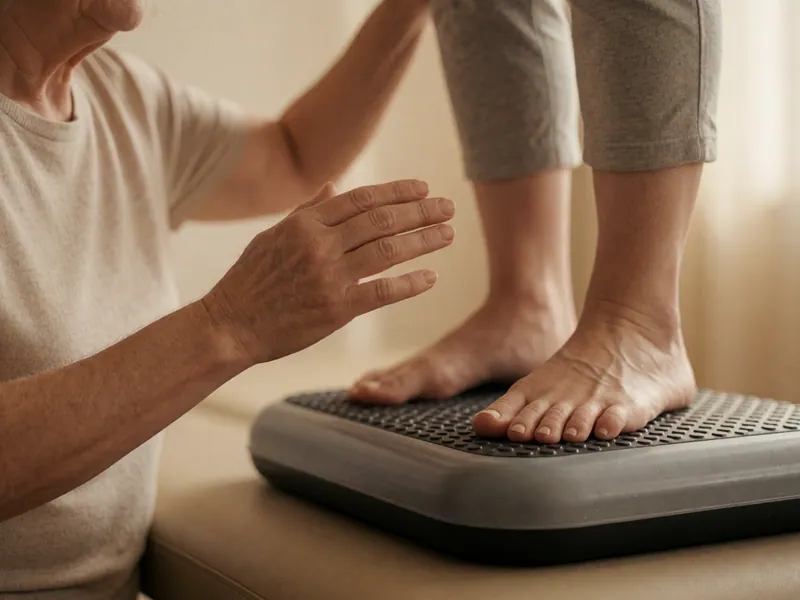
Balance & falls
Falling is not a consequence of age. It is a consequence of specific, measurable and largely trainable deficits, and we measure them.
12 – 24 visits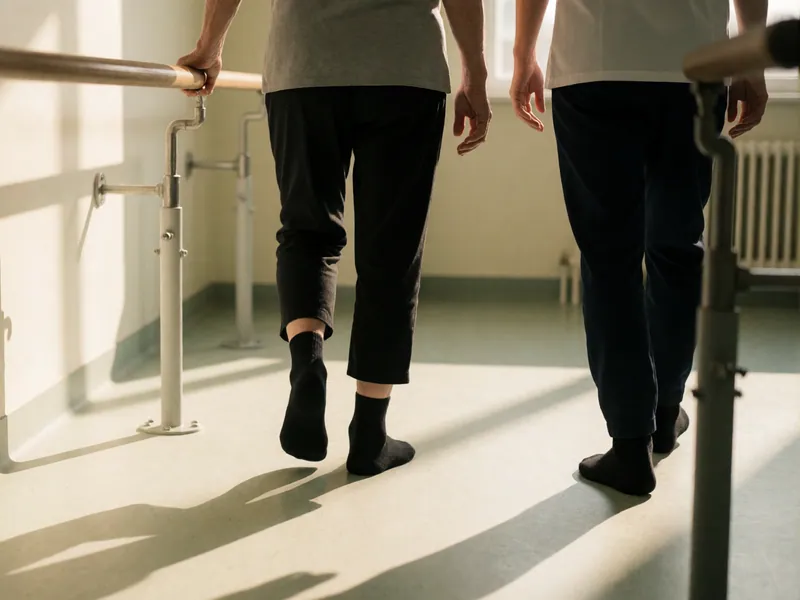
Knee replacement
The first six weeks decide the range of motion you keep. This is the rehabilitation where showing up early matters most.
16 – 24 visits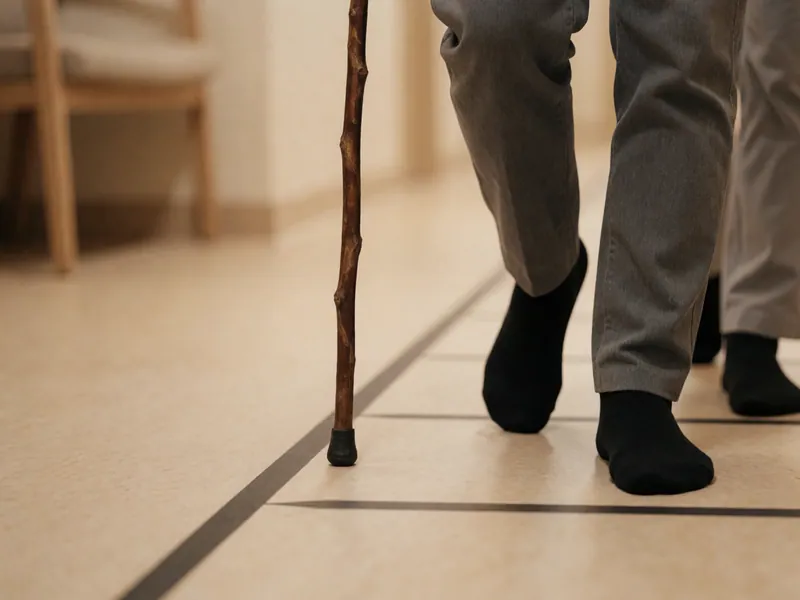
Hip replacement
Faster and less painful than the knee, and the mistake here is stopping too soon because walking feels normal before the muscle has come back.
10 – 18 visits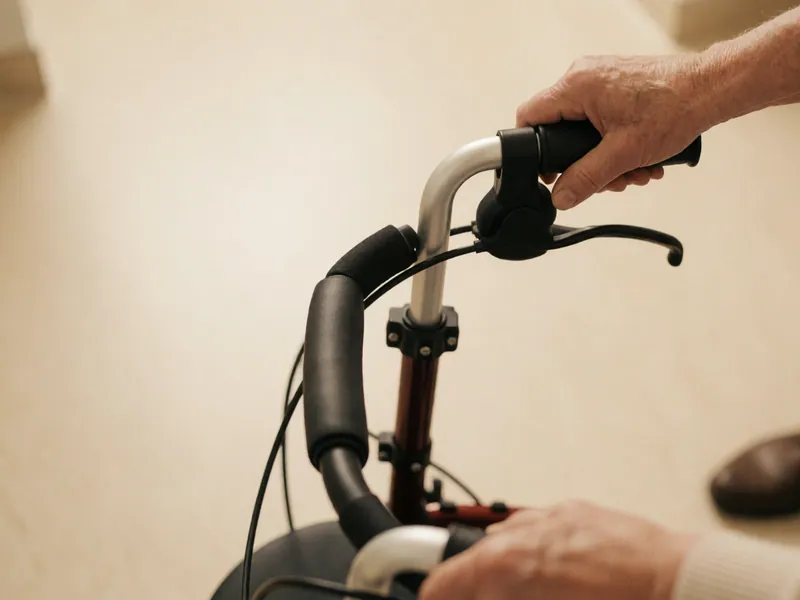
Spinal stenosis
When walking distance shrinks and leaning on a shopping trolley helps, the mechanism is specific and so is the treatment.
10 – 20 visitsSixty minutes, one to one, with the therapist you chose
Book an appointment
The booking page shows each therapist's own diary rather than a generic grid, so a slot you can see is a slot that is genuinely free. Most people do not need a doctor's referral to start — New York's direct access law runs to ten visits or thirty days — though Workers' Compensation, No-Fault and Medicare each need one from the first visit. If you are not sure which of those you are, telephone and we will work it out before you book.