
Back, neck and spine
Sciatica and referred leg pain
Pain down a leg is a symptom, not a diagnosis. At least four different things produce it and they do not respond to the same treatment, which is why the examination matters more here than almost anywhere.
“Sciatica” has come to mean any pain that travels down a leg. Strictly it means irritation of the sciatic nerve or its roots, and a great deal of leg pain is not that at all — it is referred pain from a joint, a gluteal tendon problem, or hip pathology producing symptoms in the thigh.
The distinction is not academic. True nerve root irritation has a characteristic distribution, characteristic provoking movements and a characteristic recovery pattern; referred pain from a joint has none of those and responds to a different programme entirely.
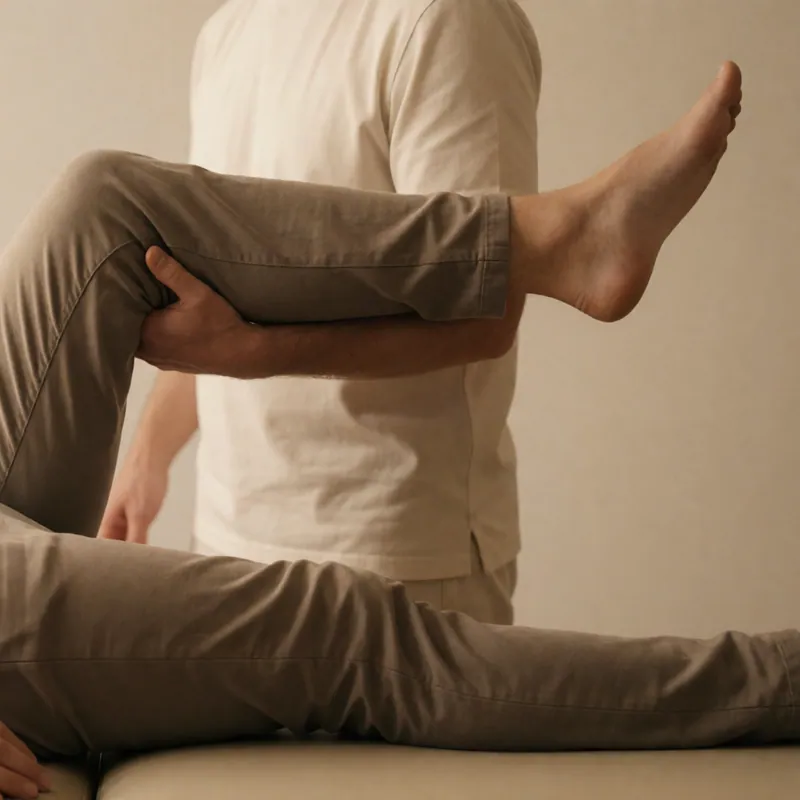
The four things it usually turns out to be
A lumbar disc irritating a nerve root. The classic presentation: pain below the knee, often worse sitting, sometimes with pins and needles in a specific distribution, and frequently with a directional preference — a movement that centralises the pain towards the back and one that sends it further down.
Lateral stenosis or foraminal narrowing. More common with age, often worse standing and walking than sitting, which is the reverse of the disc pattern and is the single most useful thing in the history.
Gluteal tendinopathy or deep hip pain referring into the thigh, usually stopping above the knee and not accompanied by any neurological sign.
And referred pain from the lumbar joints themselves, which can produce a convincing buttock and thigh ache with no nerve involvement whatever.
What recovery actually looks like
Centralisation. The useful measure of progress in nerve root pain is not how much it hurts, it is how far down the leg it reaches. Pain that has retreated from the calf to the buttock is improving even if the buttock hurts as much as the calf did, and this surprises almost everybody.
It is also slow. Eight to sixteen visits is a typical course and the tail of it can run for months. Nerve tissue settles on its own timescale and no amount of treatment accelerates it past a certain point — what treatment does is keep you moving, keep the rest of you strong, and stop the compensations that outlast the original problem.
The treatment
Find the direction that eases it and use it, repeatedly, at home, several times a day. For a large share of disc-related presentations there is a movement preference and finding it is worth more than anything else in the first fortnight.
Nerve mobility work where the nerve itself has become mechanically sensitive — gentle, graded, and easy to overdo, which is why it is taught rather than handed over on a sheet.
Then loading, as tolerance returns, aimed at the whole chain rather than at the sore spot.
When we stop and refer
Progressive weakness. A foot that catches, a leg that gives way, a calf that will not push off — getting worse rather than staying put — means a physician.
Any change in bladder or bowel control, or numbness in the saddle area, means an emergency department today. Not tomorrow, not after the appointment. We will tell you so and help you get there.
And a course that has not moved at all by the visit-four reassessment goes back to a physician rather than into another block of appointments.
When to stop and see a physician the same day. Some things are not ours to treat, and the useful skill is recognising them quickly. Unexplained weight loss, night pain that does not change with position, fever with back pain, a sudden change in bladder or bowel control, progressive weakness, a history of cancer with new bone pain, or trauma with a suspected fracture all mean we stop and send you to a physician the same day. We would far rather make that call ten times unnecessarily than miss it once.
Included as standard
How we treat this
The four causes distinguished at visit one
Because they need different programmes and a plan built on the wrong one will fail however well you follow it.
Neurological screening
Reflexes, strength and sensation, repeated as needed, with an explicit threshold for escalation.
Directional preference found early
Where there is one, it is the most valuable thing in the first fortnight and it is yours to use at home several times a day.
Progress measured by distance
How far down the leg it reaches, tracked visit by visit. Intensity alone is a poor guide in nerve pain.
Nerve mobility work taught, not handed over
It is easy to overdo and it is not something to learn from a printed sheet.
Honest timescales
Nerve tissue settles on its own schedule. We will tell you what the tail of this usually looks like rather than promising a fortnight.
When to make an appointment
Signs this is worth an assessment
- The pain travels below your knee, with or without pins and needles.
- Sitting is dramatically worse than standing, or standing and walking are dramatically worse than sitting.
- You have noticed a foot catching on kerbs or stairs.
- It started as back pain and the back has settled while the leg has not.
- You have had it for more than a fortnight and it is not retreating up the leg.
- You were told it was sciatica without anybody examining your hip.
Sciatica — how long a course usually takes
- A typical course where a nerve root is genuinely involved. Recovery is measured in how far down the leg the pain reaches, not in how much it hurts.8 – 16 visits
This is a typical number of visits for this problem, not a quote and not a promise. You get an estimate specific to you, in writing, at the first appointment, and we reassess against the same measurements at visit four rather than at visit ten — so a course that is not working gets changed or stopped instead of extended. What each visit costs is published on the pricing page: $190 for the initial evaluation and $140 for a treatment visit if you are paying yourself, or your plan's copay if you are not. We do not sell blocks of visits in advance.
Questions we are actually asked
Sciatica — frequently asked
How long does sciatica take to get better?
A typical course here is eight to sixteen visits, and the tail can run for months. Nerve tissue settles on its own timescale. The useful sign of progress is the pain retreating up the leg rather than getting less intense — pain that has moved from the calf to the buttock is improving even if it hurts the same.
Is sciatica always a disc?
No, and assuming so is the commonest error. Lateral stenosis, gluteal tendinopathy and referred pain from the lumbar joints all produce leg pain, and they need different treatment. The clearest clue in the history is whether sitting or standing is worse — the disc pattern and the stenosis pattern are usually opposites.
When is sciatica an emergency?
Any change in bladder or bowel control, or numbness in the saddle area, means an emergency department the same day rather than an appointment. Progressive weakness — a foot that catches, a leg giving way, getting worse rather than staying put — needs a physician promptly.
Should I stretch my hamstring if I have sciatica?
Frequently not, and it is the commonest self-treatment that makes things worse. If the nerve is mechanically sensitive, a hard hamstring stretch is a nerve stretch, and it will provoke exactly what you are trying to settle. We will show you the graded version, which looks similar and is not the same thing.
Do I need surgery for sciatica?
Most people do not. The majority of disc-related nerve root pain settles without an operation, though it is slower than anybody wants. Progressive weakness, cauda equina symptoms, or a genuinely unmanageable course that has not responded are the things that change the answer, and those we escalate rather than treat around.
Related conditions
Often seen alongside this
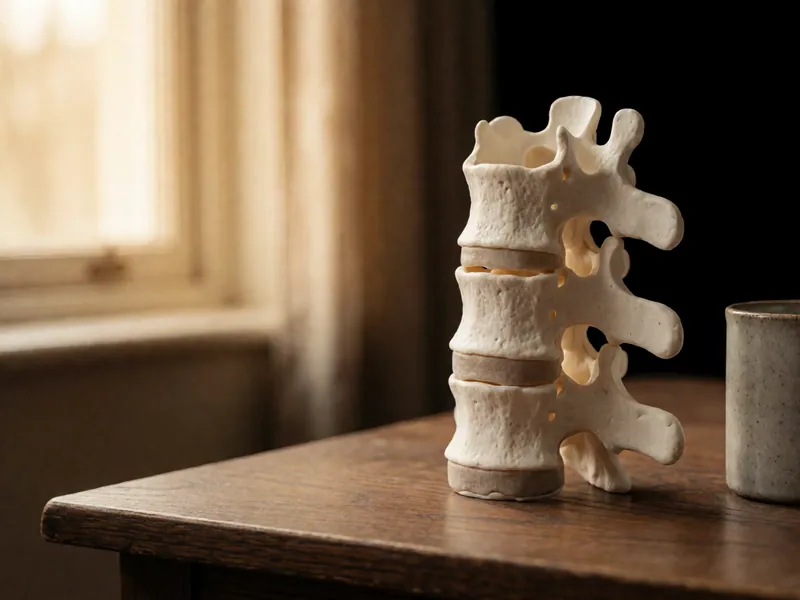
Herniated disc
The phrase that frightens people most and predicts their pain least. What the scan says, what it means, and what actually changes it.
8 – 16 visits
Low back pain
The most common reason anybody walks through this door, and the condition where the gap between what sells and what works is widest.
6 – 12 visits
Spinal stenosis
When walking distance shrinks and leaning on a shopping trolley helps, the mechanism is specific and so is the treatment.
10 – 20 visits
Hip pain
True hip pain is felt in the groin. Pain on the outside of the hip is usually a tendon, and it is made worse by exactly the stretch people are given for it.
8 – 16 visitsSixty minutes, one to one, with the therapist you chose
Book an appointment
The booking page shows each therapist's own diary rather than a generic grid, so a slot you can see is a slot that is genuinely free. Most people do not need a doctor's referral to start — New York's direct access law runs to ten visits or thirty days — though Workers' Compensation, No-Fault and Medicare each need one from the first visit. If you are not sure which of those you are, telephone and we will work it out before you book.