Back, neck and spine
Headaches that come from the neck
A minority of headaches are driven by the upper neck. Those respond well to physical therapy. The rest do not, and we screen for which you have at the first appointment rather than at the sixth.
Cervicogenic headache is head pain generated by structures in the upper cervical spine and referred into the head. It typically starts at the base of the skull, is usually one-sided and stays on that side, and is provoked by neck movement or by sustained neck positions.
It is a real diagnosis and physical therapy is genuinely one of the better treatments for it. It is also over-diagnosed by clinics that treat necks, for the obvious reason, and the honest version of this page has to say what makes us conclude it is not your diagnosis.

How we test whether the neck is the source
The examination should reproduce your familiar headache by loading the upper cervical segments, and should ease it by unloading them. Not produce some neck pain — reproduce the headache you came in about, recognisably.
Supporting features: a restricted upper cervical rotation on the affected side, poor deep neck flexor endurance, and a headache that follows sustained postures or particular neck movements rather than arriving unprovoked.
If the examination does not reproduce it, this is not the diagnosis. We will say so at the first appointment and tell you what to do instead, because six weeks of neck treatment for a migraine is six weeks and several hundred dollars.
What it is often confused with
Migraine. Frequently accompanied by neck pain — which is why the confusion is so common — but typically with light or sound sensitivity, nausea, and an episodic pattern that does not track neck position. Neck pain in migraine is usually part of the attack rather than its cause.
Tension-type headache, which is usually bilateral, band-like and not reproduced by segmental testing.
And headaches from other causes entirely, some of which need a physician promptly — a headache that is the worst you have ever had, one with fever and neck stiffness, one following a head injury, one with visual or neurological changes, or a new headache pattern after fifty.
The treatment when it is the neck
Manual therapy to the upper cervical segments, which frequently produces noticeable change quickly. This is one of the presentations where hands-on work does more of the lifting than usual.
Deep neck flexor and scapular endurance training, which is what stops it coming back and is the part that takes weeks.
And the frequency conversation: sustained positions are the usual driver, and the fix is moving more often rather than sitting differently.
When to stop and see a physician the same day. Some things are not ours to treat, and the useful skill is recognising them quickly. Unexplained weight loss, night pain that does not change with position, fever with back pain, a sudden change in bladder or bowel control, progressive weakness, a history of cancer with new bone pain, or trauma with a suspected fracture all mean we stop and send you to a physician the same day. We would far rather make that call ten times unnecessarily than miss it once.
Included as standard
How we treat this
A test rather than an assumption
The examination must reproduce your familiar headache. If it does not, this is not your diagnosis and we will say so at visit one.
Screening for the headaches that need a physician
Worst-ever headache, fever with neck stiffness, post-head-injury, neurological or visual change, or a new pattern after fifty.
Manual therapy to the upper cervical segments
One of the presentations where hands-on work does more of the lifting than usual, and change is often quick.
Endurance training that prevents recurrence
Deep neck flexors and scapular muscles, progressed over weeks. The unglamorous part that changes the pattern.
A headache diary that is actually used
Frequency, duration and what preceded each one, reviewed at the visit-four reassessment.
An exit if it is not working
If the pattern has not changed by visit four, this was probably not cervicogenic and you need a different clinician.
When to make an appointment
Signs this is worth an assessment
- The headache starts at the base of your skull and spreads forward.
- It is nearly always on the same side and does not swap.
- Certain neck movements or sustained positions bring it on predictably.
- You have neck stiffness alongside it, and the two came together.
- It has been investigated for migraine without a clear response to migraine treatment.
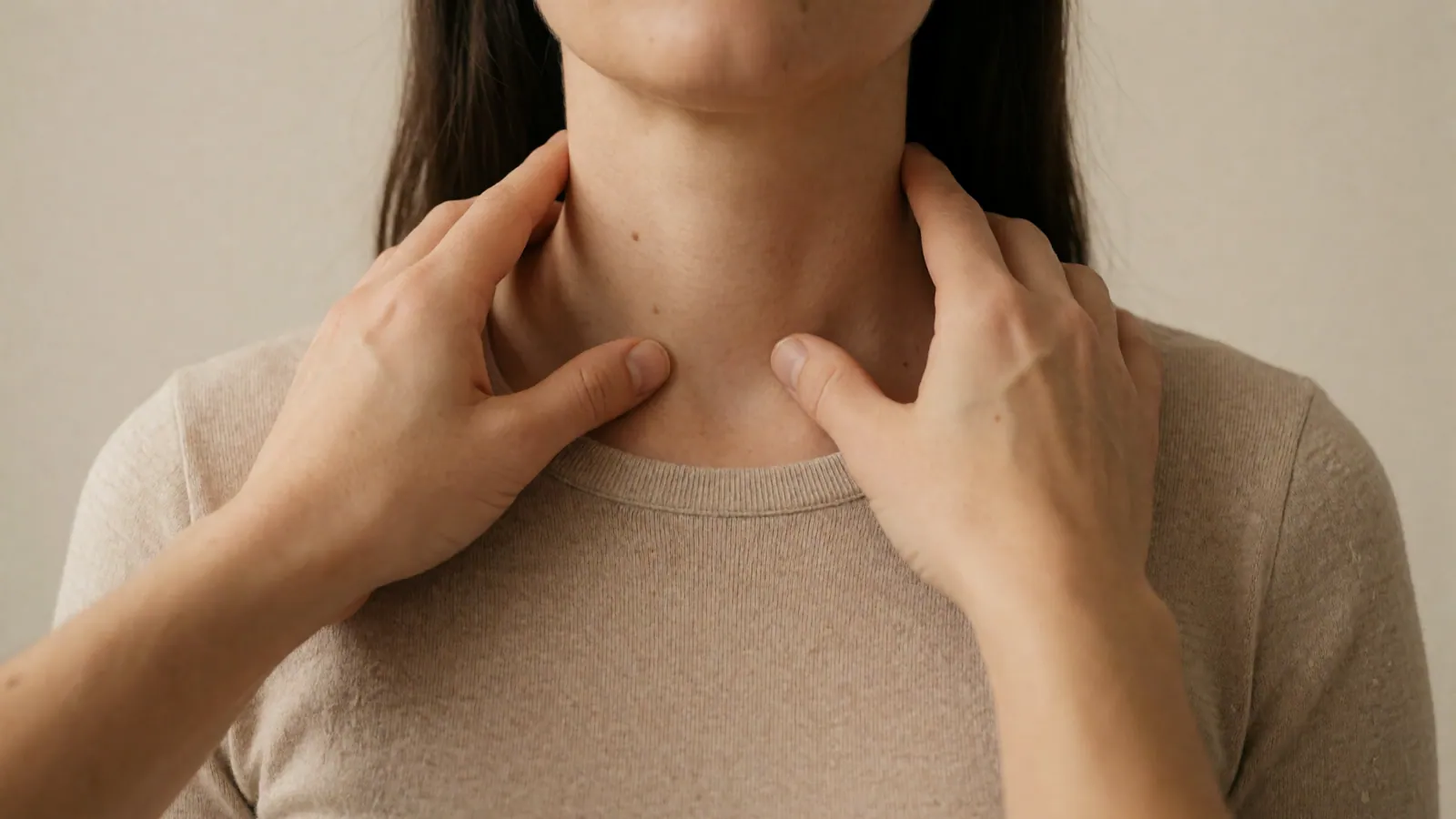
- Pressing around the top of your neck reproduces something recognisably like it.
Neck headaches — how long a course usually takes
- A typical course where the upper cervical joints reproduce and relieve your headache on examination. If they do not, this is not your diagnosis and we will say so at the first visit.6 – 10 visits
This is a typical number of visits for this problem, not a quote and not a promise. You get an estimate specific to you, in writing, at the first appointment, and we reassess against the same measurements at visit four rather than at visit ten — so a course that is not working gets changed or stopped instead of extended. What each visit costs is published on the pricing page: $190 for the initial evaluation and $140 for a treatment visit if you are paying yourself, or your plan's copay if you are not. We do not sell blocks of visits in advance.
Questions we are actually asked
Neck headaches — frequently asked
How do I know if my headache is coming from my neck?
The examination should reproduce your familiar headache by loading the upper cervical segments and ease it by unloading them — not just produce neck soreness, but recreate the headache you came in about. Supporting features are a one-sided pattern that stays on that side, restricted upper neck rotation, and headaches triggered by sustained positions.
Can physical therapy help migraines?
Not directly, and we are not going to pretend otherwise. Neck pain is very common during migraine attacks, which causes a great deal of confusion, but treating the neck does not treat the migraine. If you have both, treating a genuinely painful neck may reduce one trigger, and that is a much smaller claim.
How long does treatment take?
Typically six to ten visits where the upper cervical joints clearly reproduce and relieve your headache. This is one of the conditions where change is often noticeable early — if nothing has shifted by the visit-four reassessment, the diagnosis was probably wrong.
When should a headache be seen by a doctor urgently?
The worst headache you have ever had, a headache with fever and neck stiffness, one following a head injury, one with visual or neurological changes, or a new headache pattern starting after fifty. Those need a physician rather than a physical therapist, and we screen for them at the first appointment.
What if my headache is not coming from my neck?
We will tell you at the first appointment where we can, and tell you who to see instead. Six weeks of neck treatment for a headache the neck is not producing is six weeks of your time and several hundred dollars, and avoiding that is more useful to you than keeping the appointment.
Related conditions
Often seen alongside this

Neck pain
Desk necks, phone necks, slept-badly necks and the ones that are actually a shoulder. Telling them apart is most of the first appointment.
5 – 10 visits
Low back pain
The most common reason anybody walks through this door, and the condition where the gap between what sells and what works is widest.
6 – 12 visits
Persistent pain
For pain that has outlasted the injury. Not a cure, not a lecture about it being in your head, and not something we will pretend is quick.
12 – 20 visits
Vertigo & dizziness
Most dizziness that responds to physical therapy comes from the inner ear, and most of that is treatable in very few visits.
3 – 8 visitsSixty minutes, one to one, with the therapist you chose
Book an appointment
The booking page shows each therapist's own diary rather than a generic grid, so a slot you can see is a slot that is genuinely free. Most people do not need a doctor's referral to start — New York's direct access law runs to ten visits or thirty days — though Workers' Compensation, No-Fault and Medicare each need one from the first visit. If you are not sure which of those you are, telephone and we will work it out before you book.