Balance, nerves and dizziness
Neuropathy and nerve injury
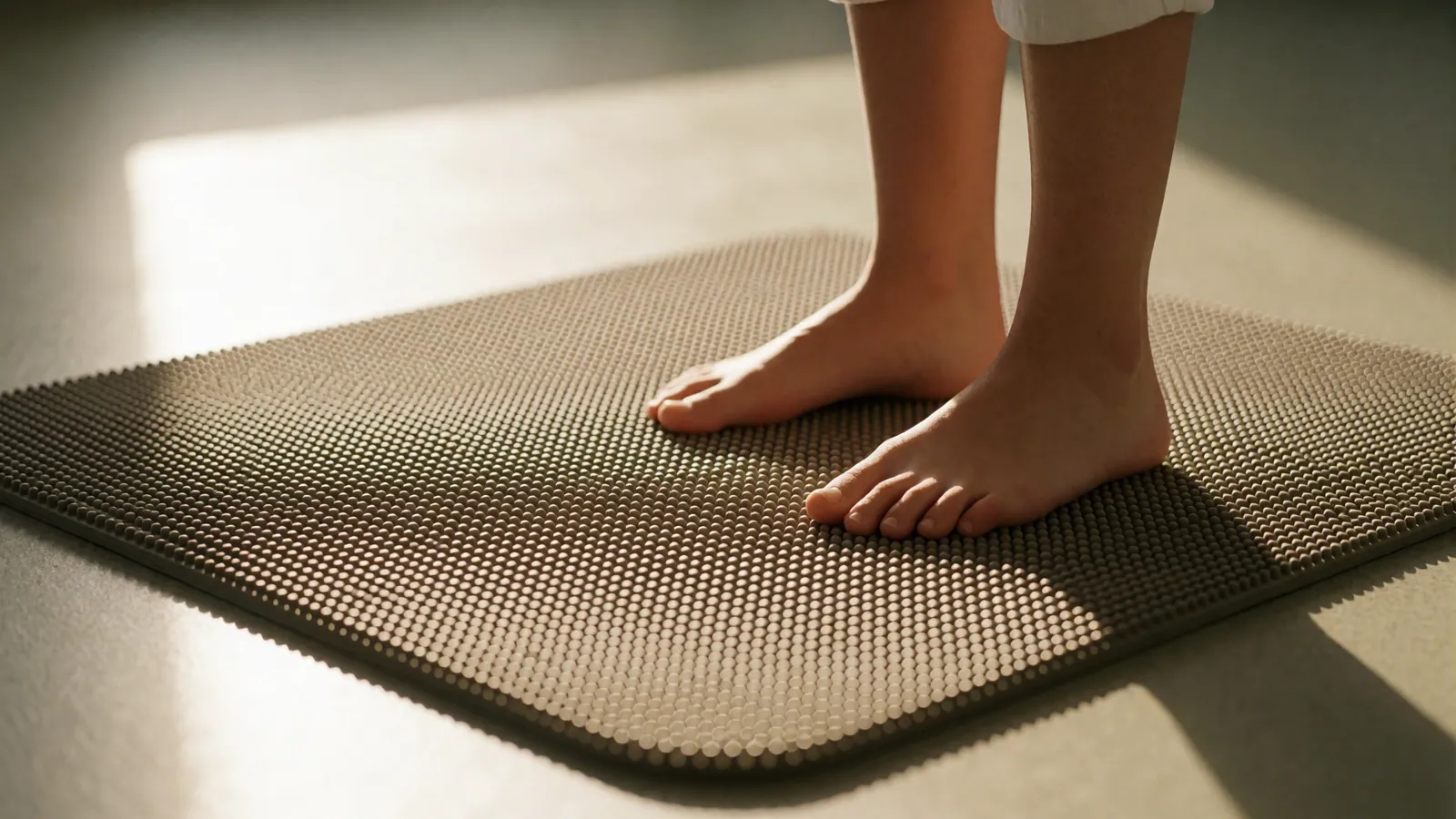
When sensation is unreliable, balance has to be rebuilt on the senses that still work. That is trainable even when the nerve is not.
Peripheral neuropathy reduces the information your feet send back about where they are and what they are standing on. Balance normally runs on three inputs — vision, the inner ear and sensation from the feet — and losing one of them means the other two have to do more.
They can, and that is what the treatment is. It does not restore the nerve. It rebuilds the system around what remains, which is the difference between somebody who avoids going out and somebody who does not.
What we treat and what we do not
We treat the consequences: balance, walking, falls risk, strength, and the confidence that has usually been lost alongside them.
We do not treat the neuropathy itself. The underlying cause — diabetic, chemotherapy-induced, inflammatory, idiopathic — is a medical problem and stays with your physician. Where the cause has not been established, establishing it matters more than anything we do and we will say so.
Numbness that is progressing, spreading, or accompanied by weakness needs medical review rather than more balance training.
How balance is rebuilt on what remains
Vision does more of the work, deliberately trained. Which is also why the dark is disproportionately dangerous for somebody with neuropathy, and why lighting at home is a genuine intervention rather than a platitude.
The vestibular system likewise, and it is worth screening for a separate inner-ear problem sitting underneath, because somebody with neuropathy and untreated positional vertigo is running on one input.
And strength, particularly at the hip and ankle, because a rapid corrective step is what saves a stumble and it is a power problem.
Feet, checked and referred
Reduced sensation means injuries go unnoticed. We look at your feet and we will tell you to see a podiatrist or your physician about anything we find, because a small unnoticed wound in a neuropathic foot is a serious problem rather than a minor one.
Footwear matters more than usual too, and it is one of the cheapest changes available.
Nerve injury after trauma or surgery
A specific nerve injured by an injury or an operation is a different problem: there is frequently a recovery timeline, and the task is maintaining range, preventing contracture and retraining the muscle as reinnervation occurs.
That needs coordination with the surgeon or neurologist, and we will telephone rather than working from assumptions about the prognosis.
Physical therapy is not chiropractic, massage or medicine. Physical therapy is not chiropractic, not massage therapy and not medicine. We do not adjust or manipulate the spine as a chiropractor does, we do not prescribe, we do not inject, and we do not diagnose disease. We assess how you move, we treat what movement can change, and we say plainly when your problem is not one of those. Naming the edge of a scope of practice is not modesty; it is the part of the licence that protects you.
Included as standard
How we treat this
Balance rebuilt on vision and the vestibular system
Deliberately trained, because the input from your feet is not coming back and the other two can do more.
A vestibular screen
Somebody with neuropathy and untreated positional vertigo is balancing on one input. It is quickly identified and often quickly fixed.
Hip and ankle power
A rapid corrective step is what saves a stumble, and it is a power problem rather than a balance one.
Lighting and home environment as real interventions
The dark is disproportionately dangerous when sensation is unreliable. This is not a platitude, it is the mechanism.
Feet looked at, and referred on
Reduced sensation means injuries go unnoticed, and a small unnoticed wound in a neuropathic foot is a serious problem.
The neuropathy left with your physician
We treat the consequences. Progressive or unexplained numbness needs medical review rather than more balance training.
When to make an appointment
Signs this is worth an assessment
- Your feet feel numb, burning or as though you are walking on padding.
- You are noticeably less steady in the dark or with your eyes closed.
- You have started watching the ground constantly when you walk.
- You have tripped or stumbled more often in the last year.
- You have had chemotherapy and your balance has changed since.
- You have a nerve injury after surgery or trauma and want it managed properly.
Neuropathy — how long a course usually takes
- A typical course for peripheral neuropathy affecting balance and walking. We treat the consequences; the neuropathy itself is a medical problem and stays with your physician.10 – 20 visits
This is a typical number of visits for this problem, not a quote and not a promise. You get an estimate specific to you, in writing, at the first appointment, and we reassess against the same measurements at visit four rather than at visit ten — so a course that is not working gets changed or stopped instead of extended. What each visit costs is published on the pricing page: $190 for the initial evaluation and $140 for a treatment visit if you are paying yourself, or your plan's copay if you are not. We do not sell blocks of visits in advance.
Questions we are actually asked
Neuropathy — frequently asked
Can physical therapy cure neuropathy?
No, and we will not suggest it can. The underlying neuropathy is a medical problem that stays with your physician. What physical therapy treats is the consequences — balance, walking, falls risk and strength — and those are genuinely trainable even when the nerve is not.
Why is my balance so much worse in the dark?
Because balance normally runs on three inputs — vision, the inner ear and sensation from the feet — and if the feet are unreliable you are leaning heavily on vision. Take the light away and you are down to one. It is why lighting at home is a genuine intervention rather than a platitude.
Is it safe for me to exercise with neuropathy?
Generally yes, and it is important, with two specific cautions: balance work has to be progressed with something to hold, and your feet need checking regularly because reduced sensation means injuries go unnoticed. We will look at your feet and tell you what to raise with a podiatrist.
Will my nerve recover after surgery or injury?
It depends entirely on the nerve and the injury, and that prognosis belongs to your surgeon or neurologist rather than to us. What we do meanwhile is maintain range, prevent contracture and retrain the muscle as reinnervation occurs — and we will telephone them rather than working from assumptions.
My numbness is spreading. Should I keep coming?
No — that needs medical review first. Numbness that is progressing, spreading or accompanied by new weakness is a reason to see a physician rather than to continue balance training, and we will say so and help you arrange it.
Related conditions
Often seen alongside this
Balance & falls
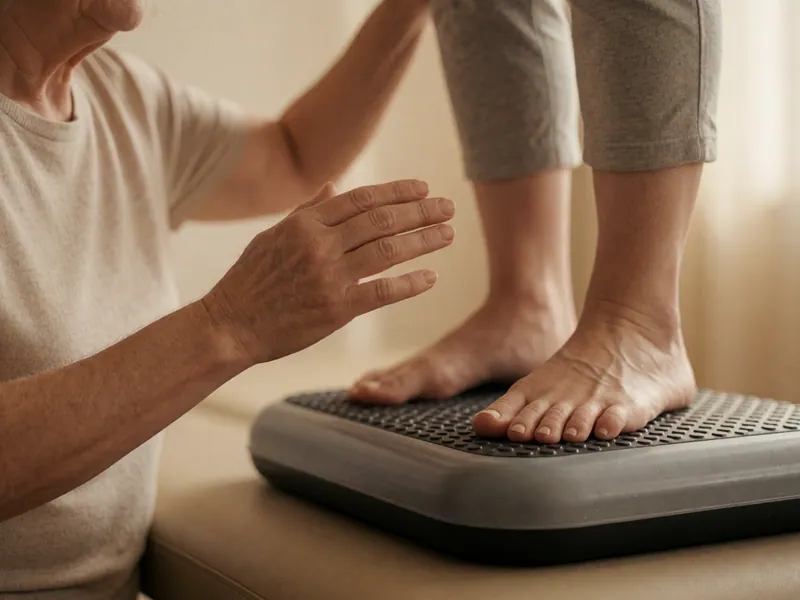
Falling is not a consequence of age. It is a consequence of specific, measurable and largely trainable deficits, and we measure them.
12 – 24 visits
Older adults
Strength training works at eighty. It works at ninety. The dose that works is heavier than almost anybody is offered.
12 – 24 visits
Vertigo & dizziness
Most dizziness that responds to physical therapy comes from the inner ear, and most of that is treatable in very few visits.
3 – 8 visits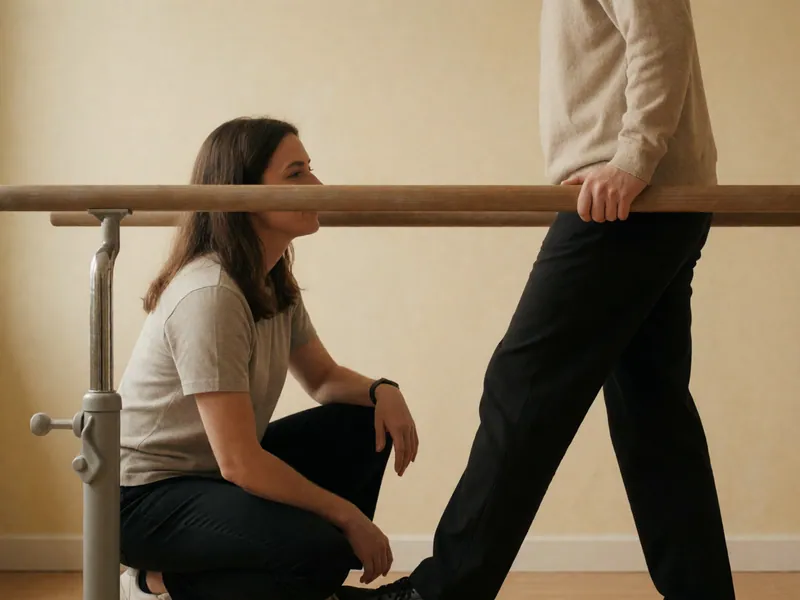
Stroke rehab
Recovery does not stop at six months. It slows, and what happens after that depends heavily on how much you actually practise.
24 – 48 visitsSixty minutes, one to one, with the therapist you chose
Book an appointment
The booking page shows each therapist's own diary rather than a generic grid, so a slot you can see is a slot that is genuinely free. Most people do not need a doctor's referral to start — New York's direct access law runs to ten visits or thirty days — though Workers' Compensation, No-Fault and Medicare each need one from the first visit. If you are not sure which of those you are, telephone and we will work it out before you book.