Joints, muscles and tendons
Rotator cuff pain and tears
A tear on a scan is not automatically the tear causing your pain, and loaded exercise beats rest for most of them. Many people do very well without an operation.
The rotator cuff is four tendons holding the ball of the shoulder into a shallow socket while the arm does everything else. Cuff problems run from irritation without any structural change, through partial tears, to full-thickness tears — and the relationship between where you sit on that scale and how much you hurt is much looser than it sounds.
Degenerative cuff tears are common with age and a large share are entirely symptomless. A shoulder can have a full-thickness tear and full function. So the question is never simply “is there a tear”, it is what the shoulder can currently do and what it responds to.
What the evidence supports
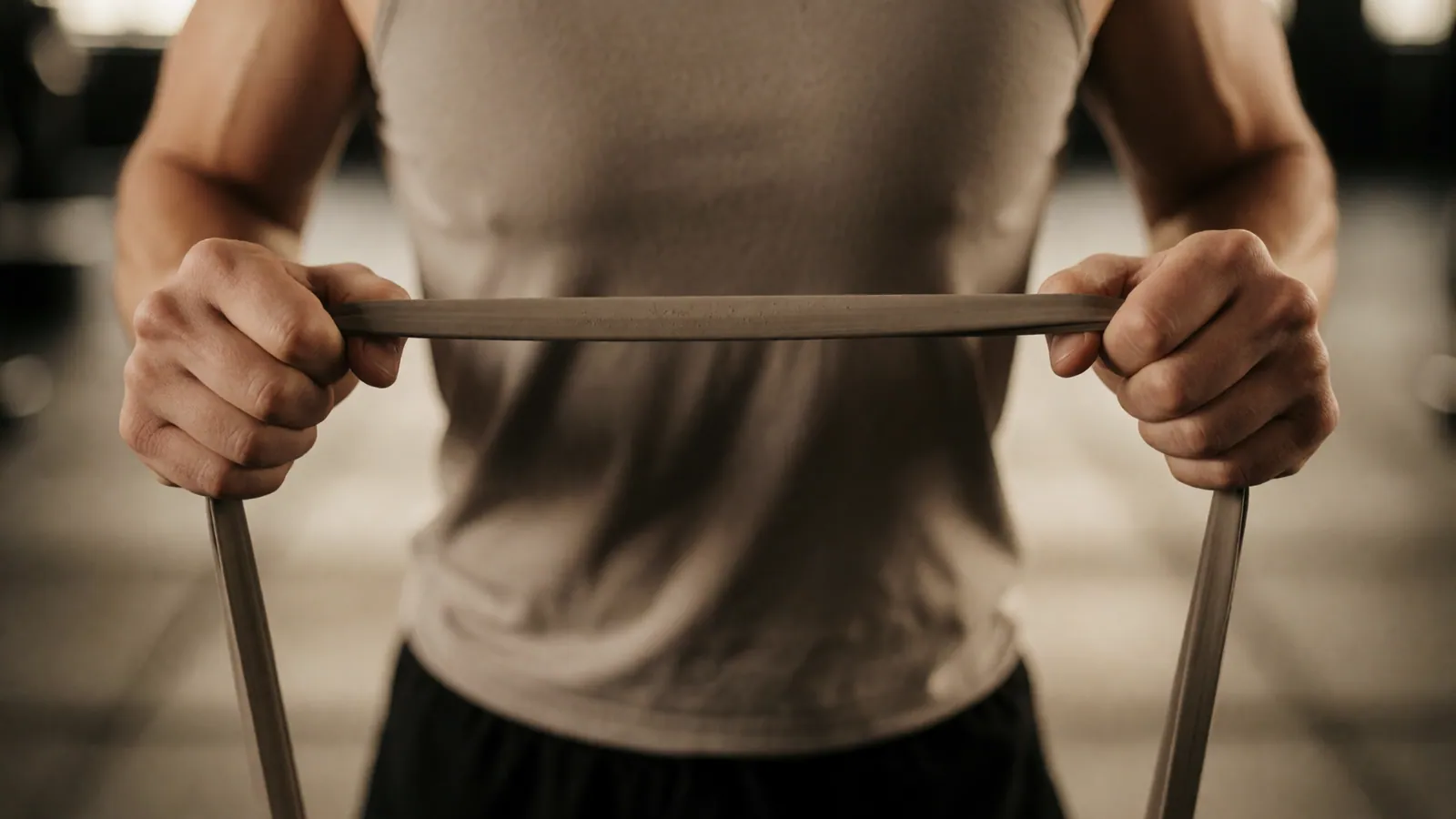
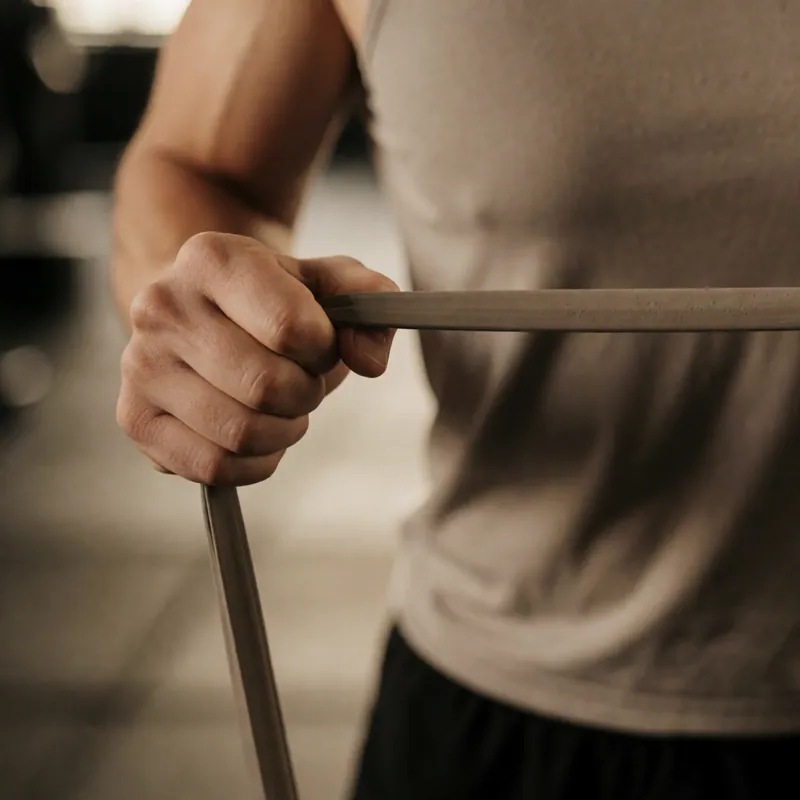
Progressive loaded exercise is the first-line treatment for most non-traumatic cuff problems, including a good many partial and degenerative full-thickness tears. It works by increasing the capacity of what remains rather than by repairing anything, and for a large proportion of people that is sufficient.
What it is not is fast. Ten to eighteen visits is typical and the course runs over months. The first fortnight is frequently uncomfortable, which is expected in tendon loading and is the reason so many self-directed attempts get abandoned early.
When surgery is the right answer
An acute traumatic tear in a younger person — a fall, a sudden load, an immediate loss of power — is a different problem from a degenerative tear that has been there for years, and it frequently warrants a prompt surgical opinion. We will say so.
So does a shoulder that genuinely cannot elevate against gravity, and a well-run conservative course that has not produced functional change in somebody whose life has stopped.
A practice that never recommends a surgical opinion is not being conservative. We would rather send you and be told it was not needed.
The programme
Isometrics early where the tendon is irritable, because they load without provoking.
Then progressive resistance through increasing range, adding external rotation and elevation load as tolerance builds, with the shoulder blade trained alongside rather than afterwards.
And sleep. A cuff problem that wakes you every night is a cuff problem that will not settle, and there are specific positional strategies worth more than any exercise in the first fortnight.
A scan describes a structure; it does not describe your pain. A scan describes a structure at a moment; it does not describe your pain. Disc bulges, degeneration and rotator cuff tears turn up in large numbers of people who have no symptoms at all, and their prevalence rises steadily with age in people who feel completely well. So a report can be entirely accurate and still not be the reason your back hurts. We read your imaging, we take it seriously when it changes the plan, and we will not let a phrase from a radiology report become the story you tell yourself about your spine.
Included as standard
How we treat this
A tear put in proportion
Cuff tears are common in pain-free shoulders and more common with age. We will tell you honestly whether yours explains your symptoms.
Isometric loading while it is irritable
Load without provocation, so the tendon is being trained from the first week rather than rested into deconditioning.
Progressive resistance as the substance
Increasing range and load, with clear criteria for each progression rather than a weekly schedule.
Sleep addressed in the first fortnight
A shoulder that wakes you nightly will not settle. Positional strategies here are worth more than any exercise.
Scapular work trained alongside
Not as a separate later phase. The cuff and the blade work together or they do not work.
A prompt surgical opinion where it is warranted
Acute traumatic tears, a shoulder that cannot elevate against gravity, or a genuinely failed conservative course.
When to make an appointment
Signs this is worth an assessment
- Reaching overhead or out to the side produces a distinct arc of pain.
- You cannot sleep on that shoulder and it wakes you.
- You have lost power rather than only comfort — lifting a kettle has changed.
- It followed a fall or a sudden heavy load and the shoulder has not recovered.
- A scan reported a tear and you would like a view on whether it needs operating on.
- You have been resting it for two months and it is stiffer rather than better.
Rotator cuff — how long a course usually takes
- A typical course for a non-operative cuff problem. Many partial and even full-thickness degenerative tears do well without surgery, which is not the same as saying yours will.10 – 18 visits
This is a typical number of visits for this problem, not a quote and not a promise. You get an estimate specific to you, in writing, at the first appointment, and we reassess against the same measurements at visit four rather than at visit ten — so a course that is not working gets changed or stopped instead of extended. What each visit costs is published on the pricing page: $190 for the initial evaluation and $140 for a treatment visit if you are paying yourself, or your plan's copay if you are not. We do not sell blocks of visits in advance.
Questions we are actually asked
Rotator cuff — frequently asked
Do I need surgery for a rotator cuff tear?
Frequently not. Many partial and degenerative full-thickness tears do well with progressive loaded exercise, which increases the capacity of what remains. What changes the answer is an acute traumatic tear in a younger person, a shoulder that genuinely cannot elevate against gravity, or a well-run conservative course that has failed — and those we send for an opinion.
Can physical therapy heal a torn rotator cuff?
It does not repair the tendon, and any clinic saying otherwise is describing something that does not happen. What it does is build the capacity of the remaining tissue and the surrounding muscles enough that the shoulder works and stops hurting, which for a large proportion of people is sufficient.
Why does my shoulder hurt more at night?
Lying down changes the pressure in the subacromial space and removes the small postural adjustments you make all day without noticing. It is characteristic of cuff problems rather than a sign of something worse — and it is the first thing we address, because a shoulder that wakes you nightly will not settle.
Should I rest it until the pain stops?
No. Rest reliably produces a shoulder that is stiff and weak as well as sore, and stiffness is harder to treat than soreness. We load it in ways it tolerates from the first week — isometrics if it is irritable — and progress from there.
How long does rotator cuff rehabilitation take?
Ten to eighteen visits is typical for a non-operative cuff problem, spread over several months. The first fortnight is often uncomfortable, which is expected in tendon loading and is why so many self-directed attempts stop early.
Related conditions
Often seen alongside this
Shoulder pain
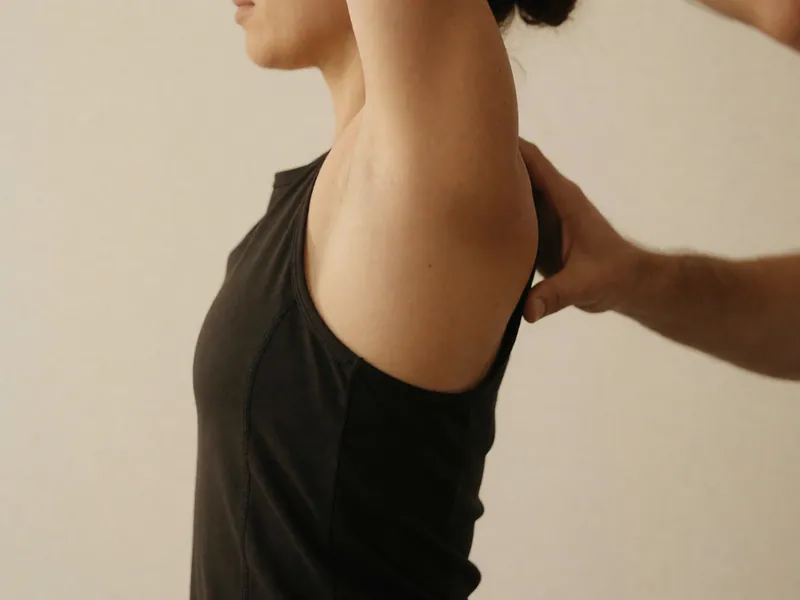
Five structures in a small space, all of which hurt in roughly the same place. The examination is what separates them.
8 – 14 visits
Cuff repair
A repaired tendon has to be protected before it can be loaded. Getting the order wrong is how a good repair fails.
20 – 32 visits
Frozen shoulder
The one condition where we will tell you at the first visit roughly how long it will take, and that the honest answer is measured in seasons.
12 – 24 visits
Strains & tears
Hamstrings, calves and groins. The reinjury rate is high and it is high because people return to sport on how it feels rather than on what it can do.
6 – 14 visitsSixty minutes, one to one, with the therapist you chose
Book an appointment
The booking page shows each therapist's own diary rather than a generic grid, so a slot you can see is a slot that is genuinely free. Most people do not need a doctor's referral to start — New York's direct access law runs to ten visits or thirty days — though Workers' Compensation, No-Fault and Medicare each need one from the first visit. If you are not sure which of those you are, telephone and we will work it out before you book.