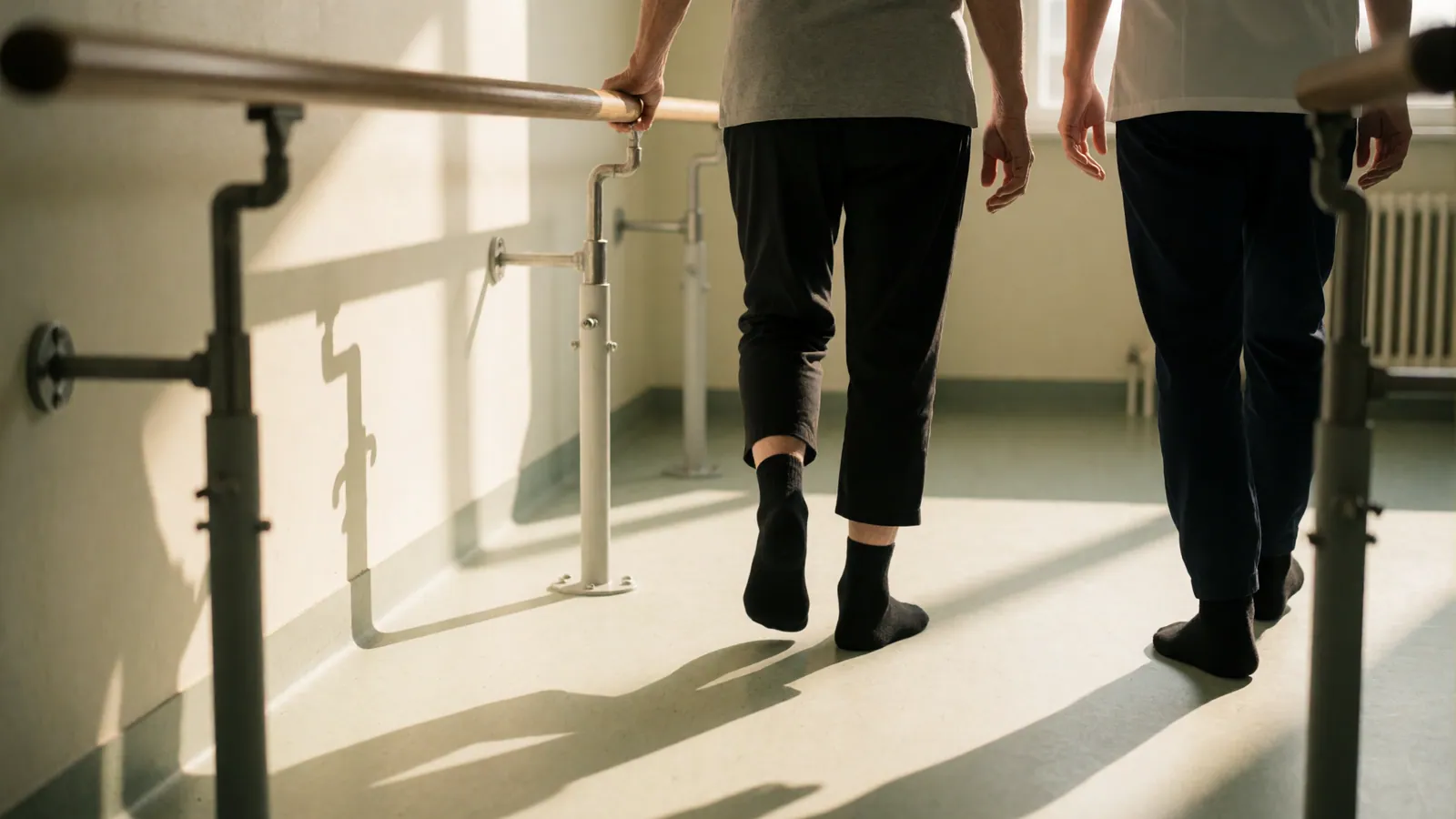
Rehabilitation after surgery
Rehabilitation after knee replacement
The first six weeks decide the bending range you keep. This is the rehabilitation where turning up early matters most, and where a delayed start is genuinely hard to recover from.
A knee replacement is a very good operation and the recovery is harder work than most people are warned about. The single most useful thing to know beforehand is that flexion — how far the knee bends — recovered in the first six weeks is far easier to gain than flexion recovered afterwards, because scar tissue matures and stiffens on roughly that timescale.
That is why we would rather see you three times a week early and taper, than spread the same number of visits evenly across three months. It is the same total cost and a materially different knee.

What the first six weeks are for
Range, range and swelling. Bending and straightening, worked at every day, at home as well as here. Full extension matters as much as flexion and is more often lost — a knee that will not straighten fully produces a limp that outlasts everything else.
Swelling control, because a swollen knee will not bend and will not fire its quadriceps properly. Elevation, compression and movement, in that order of neglect.
And quadriceps activation, which is frequently absent for the first fortnight after this operation. This is one of the few places we use electrical stimulation, for exactly that job, for a defined period, until the muscle switches on.
Then strength, for months
Once range is secured, the work becomes strength, and it runs well past the point where most people assume rehabilitation is over. Quadriceps strength at six months after a knee replacement is frequently well below the other side, and that deficit is what decides stair confidence, walking distance and whether you are still using a handrail a year later.
The commonest error we correct is stopping at the point where the knee feels acceptable for flat walking. That is roughly halfway.
Your surgeon's protocol governs
Weight-bearing status, any restrictions, and the timeline all come from the operating surgeon. We work to their protocol rather than around it, and where we think a restriction is holding you back we telephone them rather than quietly ignoring it.
Bring the discharge paperwork to the first appointment. If you do not have it, tell us who operated and we will get it.
Insurance, planned in advance
This is a course where the visit cap matters. Sixteen to twenty-four visits is typical and a plan allowing twenty needs the schedule planned rather than discovered — front-loaded into the six-week window, then spaced.
We check the benefit before your first appointment and tell you the number. If the arithmetic is tight we will say where the self-pay portion would fall, at the start rather than in month three.
Your plan's visit cap, checked before you start. Most commercial plans cap physical therapy visits per calendar year, and the cap is frequently lower than the course of treatment a condition needs. We check your benefit before the first visit rather than after the sixth, we tell you the number, and we plan the course around it — front-loading the hands-on work and handing you more of the programme to run yourself if the arithmetic says we should.
Included as standard
How we treat this
Front-loaded scheduling
Three times a week early, tapering later. The same visits, deliberately arranged around the six-week window rather than spread evenly.
Extension chased as hard as flexion
A knee that will not fully straighten produces a limp that outlasts everything else, and it is the range more often lost.
Electrical stimulation for quadriceps activation
One of the few jobs a machine genuinely does here, for a defined period, until the muscle switches on.
Strength work past the comfortable point
Quadriceps deficits at six months decide stair confidence and walking distance. Most courses stop at halfway.
The surgeon's protocol followed
Weight-bearing status and restrictions are theirs. Where we disagree we telephone them rather than ignoring it.
The visit cap planned around
Checked before your first appointment, with the schedule built to fit it and the shortfall named at the start.
When to make an appointment
Signs this is worth an assessment
- You have a knee replacement booked and want to prepare properly beforehand.
- You are two weeks post-operative and worried the bend is not coming.
- Your knee will not straighten fully and you have started to limp.
- You were discharged from hospital rehabilitation and are unsure what happens next.
- You are six months out, walking fine on the flat, and stairs are still a problem.
- You are managing but still using a handrail and would rather not be.
Knee replacement — how long a course usually takes
- A typical course over three months, starting within days of discharge. Bending range recovered in the first six weeks is very difficult to gain afterwards.16 – 24 visits
This is a typical number of visits for this problem, not a quote and not a promise. You get an estimate specific to you, in writing, at the first appointment, and we reassess against the same measurements at visit four rather than at visit ten — so a course that is not working gets changed or stopped instead of extended. What each visit costs is published on the pricing page: $190 for the initial evaluation and $140 for a treatment visit if you are paying yourself, or your plan's copay if you are not. We do not sell blocks of visits in advance.
Questions we are actually asked
Knee replacement — frequently asked
When should physical therapy start after a knee replacement?
Within days of discharge. Flexion recovered in the first six weeks is far easier to gain than flexion recovered afterwards, because scar tissue matures on roughly that timescale. A delayed start is genuinely hard to recover from, which is why we front-load the schedule rather than spreading visits evenly.
How many sessions will I need after a knee replacement?
Typically sixteen to twenty-four over about three months. If your plan caps visits below that we will tell you before you start and build the schedule around the six-week window, which is where the visits are worth most.
How much should my knee bend after surgery?
Your surgeon will give you a target and it varies with the implant and the individual. What matters more than the number is the trajectory in the first six weeks, and full extension matters as much as flexion — it is the range more often lost and the one that produces a lasting limp.
Should I be using ice and elevation?
Yes, and more than most people do. A swollen knee will not bend and will not fire its quadriceps properly, so swelling control is not a comfort measure early on — it is what makes the range work possible.
Can I prepare before the operation?
Yes, and it measurably improves the recovery. Strength built before surgery — particularly quadriceps — shortens the time to independent walking afterwards. If your date is six weeks away, that is enough time to make a real difference.
Related conditions
Often seen alongside this
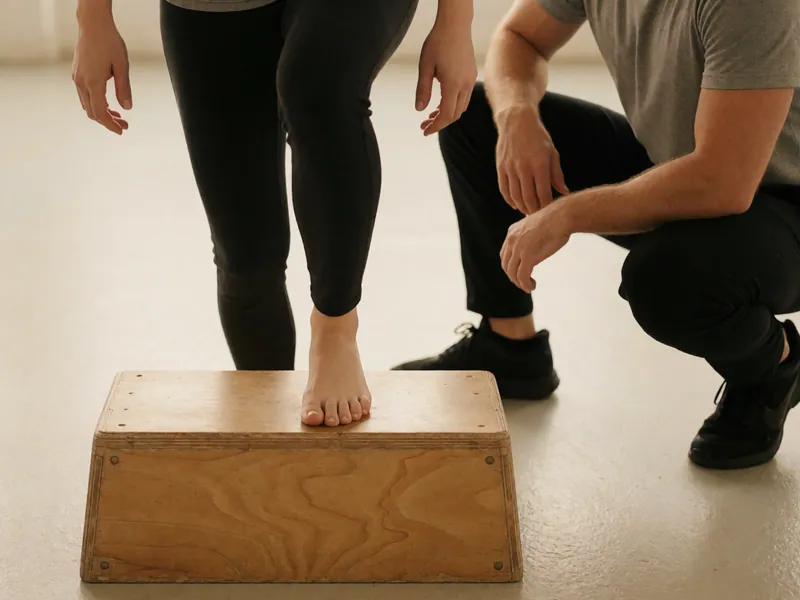
Knee pain
Stairs, kneeling, running, or the knee that hurts because of what the hip is not doing. All four get a different programme.
6 – 14 visits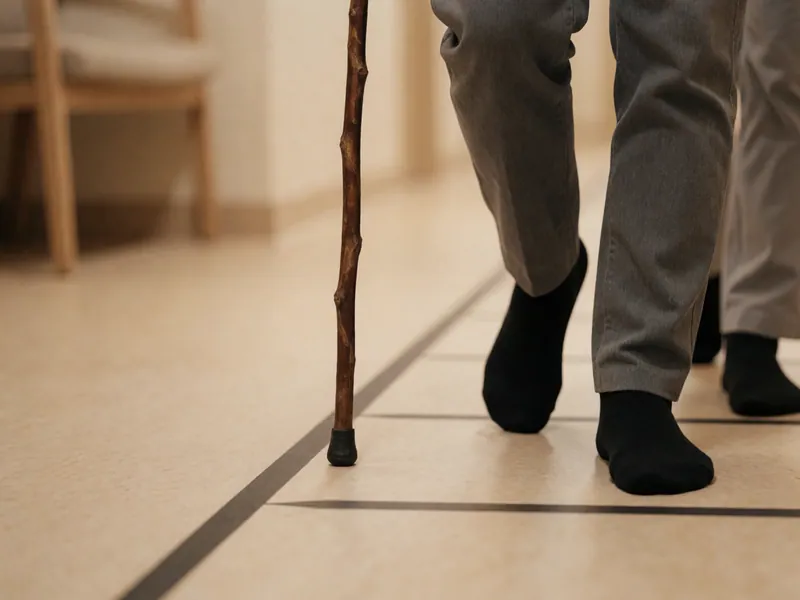
Hip replacement
Faster and less painful than the knee, and the mistake here is stopping too soon because walking feels normal before the muscle has come back.
10 – 18 visits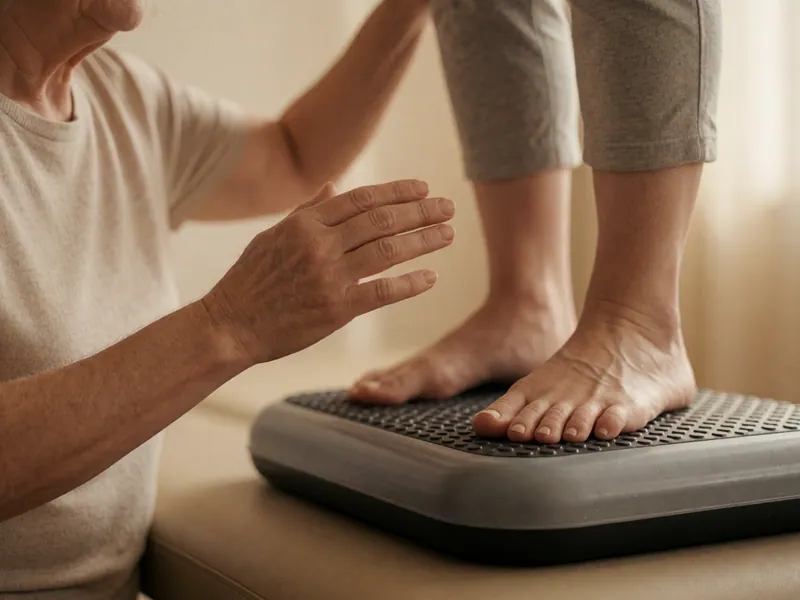
Balance & falls
Falling is not a consequence of age. It is a consequence of specific, measurable and largely trainable deficits, and we measure them.
12 – 24 visits
Older adults
Strength training works at eighty. It works at ninety. The dose that works is heavier than almost anybody is offered.
12 – 24 visitsSixty minutes, one to one, with the therapist you chose
Book an appointment
The booking page shows each therapist's own diary rather than a generic grid, so a slot you can see is a slot that is genuinely free. Most people do not need a doctor's referral to start — New York's direct access law runs to ten visits or thirty days — though Workers' Compensation, No-Fault and Medicare each need one from the first visit. If you are not sure which of those you are, telephone and we will work it out before you book.