Rehabilitation after surgery
Rehabilitation after rotator cuff repair
A repaired tendon has to be protected before it can be loaded. Getting the order wrong is how a good repair fails, and it is not recoverable.
A cuff repair reattaches tendon to bone, and that attachment has to heal biologically before it can take load. The healing takes months and it cannot be hurried. During that period the shoulder feels better than it is, which is the whole hazard.
Retear after cuff repair is not rare, and premature active loading is one of the contributing factors we can actually control. So the discipline of the early phase matters more here than almost anywhere in this file.
The phases, and who sets them
Protection: the sling, passive range only, and no active elevation. How long this lasts, and how much passive range is permitted, is set by your operating surgeon based on the size of the tear, the quality of the tissue and the repair technique. It is not a range we adjust.
Active-assisted, then active: introduced when your surgeon releases them, which is a date they set rather than one we infer from how you feel.
Strengthening: last, and gradual, running out to four to six months. The shoulder that feels ready at twelve weeks is a shoulder whose repair is still maturing.
What we do during the protection phase
Not nothing, which is what people assume. Passive range within the permitted limits, elbow, wrist and hand work, scapular setting, posture and the whole of the other side.
And swelling, pain and sleep, which in the first fortnight is most of what somebody actually needs. Sleeping after a cuff repair is genuinely difficult and there are specific arrangements that help.
Also: the sling. How to wear it, when it comes off, and what you may do with the arm out of it — which is a surprisingly common source of accidental early loading, usually while getting dressed.
Why we will not accelerate it for you
People ask, reasonably, because it is a long and boring period. The answer is that a retear is frequently not repairable a second time with the same result, and that the cost of being six weeks slow is six weeks while the cost of being six weeks fast can be permanent.
If you think your protocol is unusually conservative, tell us and we will telephone your surgeon. What we will not do is quietly adjust it.
Your plan's visit cap, checked before you start. Most commercial plans cap physical therapy visits per calendar year, and the cap is frequently lower than the course of treatment a condition needs. We check your benefit before the first visit rather than after the sixth, we tell you the number, and we plan the course around it — front-loading the hands-on work and handing you more of the programme to run yourself if the arithmetic says we should.
Included as standard
How we treat this
The surgeon's protocol as the governing document
Tear size, tissue quality and repair technique change the timeline materially, and those are the surgeon's call.
A protection phase that is not idle
Passive range within limits, the elbow, wrist and hand, scapular setting, and the whole of the other side.
Sleep addressed in the first fortnight
It is genuinely difficult after this operation and it is most of what people actually need early on.
Sling education, including undressing
Accidental early loading usually happens getting dressed, and nobody warns people about it.
Strengthening introduced last and gradually
Out to four to six months. A shoulder that feels ready at twelve weeks has a repair that is still maturing.
We telephone rather than adjust
If a protocol looks unusual we ring your surgeon. We do not quietly change it and we will tell you when we have called.
When to make an appointment
Signs this is worth an assessment
- You have a cuff repair booked and want to know what the months afterwards look like.
- You are in a sling and unsure what you are allowed to do.
- You have been released to active movement and want it progressed properly.
- You are three months out and the shoulder feels stiff rather than weak.
- You cannot sleep and nobody has given you a workable arrangement.
- You are approaching six months and want to know what full recovery involves.
Cuff repair — how long a course usually takes
- A typical course over four to six months, in phases set by the surgeon's protocol. Nothing is loaded actively until the repair is ready, and that timing is theirs rather than ours.20 – 32 visits
This is a typical number of visits for this problem, not a quote and not a promise. You get an estimate specific to you, in writing, at the first appointment, and we reassess against the same measurements at visit four rather than at visit ten — so a course that is not working gets changed or stopped instead of extended. What each visit costs is published on the pricing page: $190 for the initial evaluation and $140 for a treatment visit if you are paying yourself, or your plan's copay if you are not. We do not sell blocks of visits in advance.
Questions we are actually asked
Cuff repair — frequently asked
How long does rotator cuff repair rehabilitation take?
Four to six months of structured rehabilitation, typically twenty to thirty-two visits, with full recovery of strength often running towards a year. The phases are set by your operating surgeon based on tear size, tissue quality and technique.
Why can't I move my arm actively at first?
Because the repair is a tendon reattached to bone, and that attachment has to heal biologically before it can take the load of the muscle pulling on it. Active elevation early is one of the controllable contributors to retear, and a retear frequently cannot be repaired a second time with the same result.
Can I speed up the protocol?
No, and we would not, and this is one of the few places on this site where the answer is that flat. Being six weeks slow costs six weeks; being six weeks fast can cost the repair. If you think your protocol is unusually conservative, tell us and we will telephone your surgeon rather than adjusting it ourselves.
What can I do while I am in the sling?
More than you would think. Passive range within your permitted limits, elbow, wrist and hand work, scapular setting, and everything on the other side. The commonest source of accidental early loading is getting dressed, and we will show you how to avoid it.
How do I sleep after cuff repair surgery?
Usually semi-upright with the arm supported, and it is genuinely difficult for the first few weeks. There are specific arrangements that help substantially and it is one of the first things we work on, because a shoulder that keeps you awake makes everything else harder.
Related conditions
Often seen alongside this
Rotator cuff
A tear on a scan is not automatically the tear causing your pain, and loaded exercise beats rest for most of them.
10 – 18 visits
Shoulder pain
Five structures in a small space, all of which hurt in roughly the same place. The examination is what separates them.
8 – 14 visits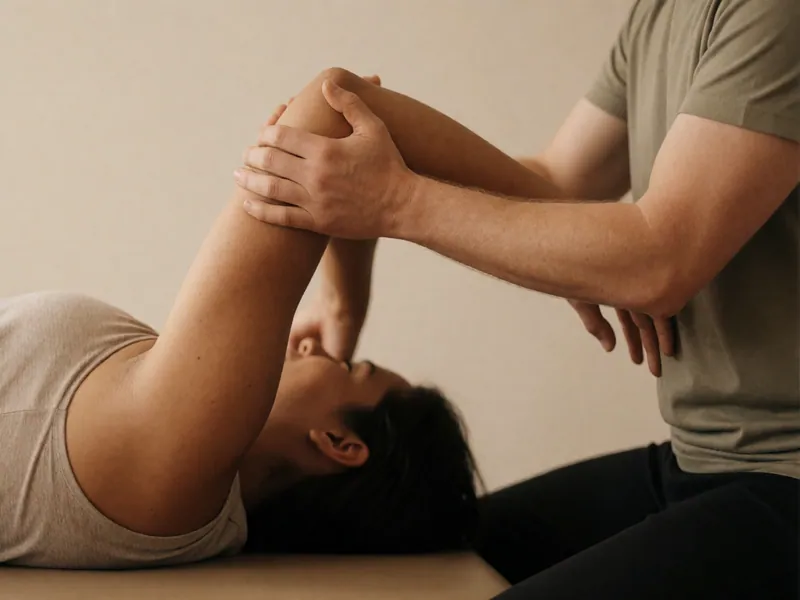
Frozen shoulder
The one condition where we will tell you at the first visit roughly how long it will take, and that the honest answer is measured in seasons.
12 – 24 visits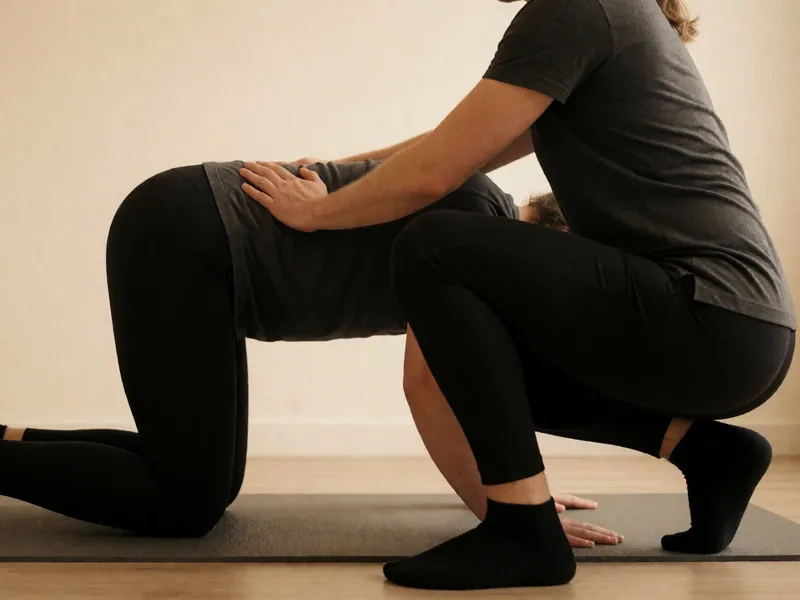
Spine surgery
Discectomy, decompression or fusion. Three different operations with three different sets of things you may not yet do.
12 – 24 visitsSixty minutes, one to one, with the therapist you chose
Book an appointment
The booking page shows each therapist's own diary rather than a generic grid, so a slot you can see is a slot that is genuinely free. Most people do not need a doctor's referral to start — New York's direct access law runs to ten visits or thirty days — though Workers' Compensation, No-Fault and Medicare each need one from the first visit. If you are not sure which of those you are, telephone and we will work it out before you book.